
Last updated November 24, 2026
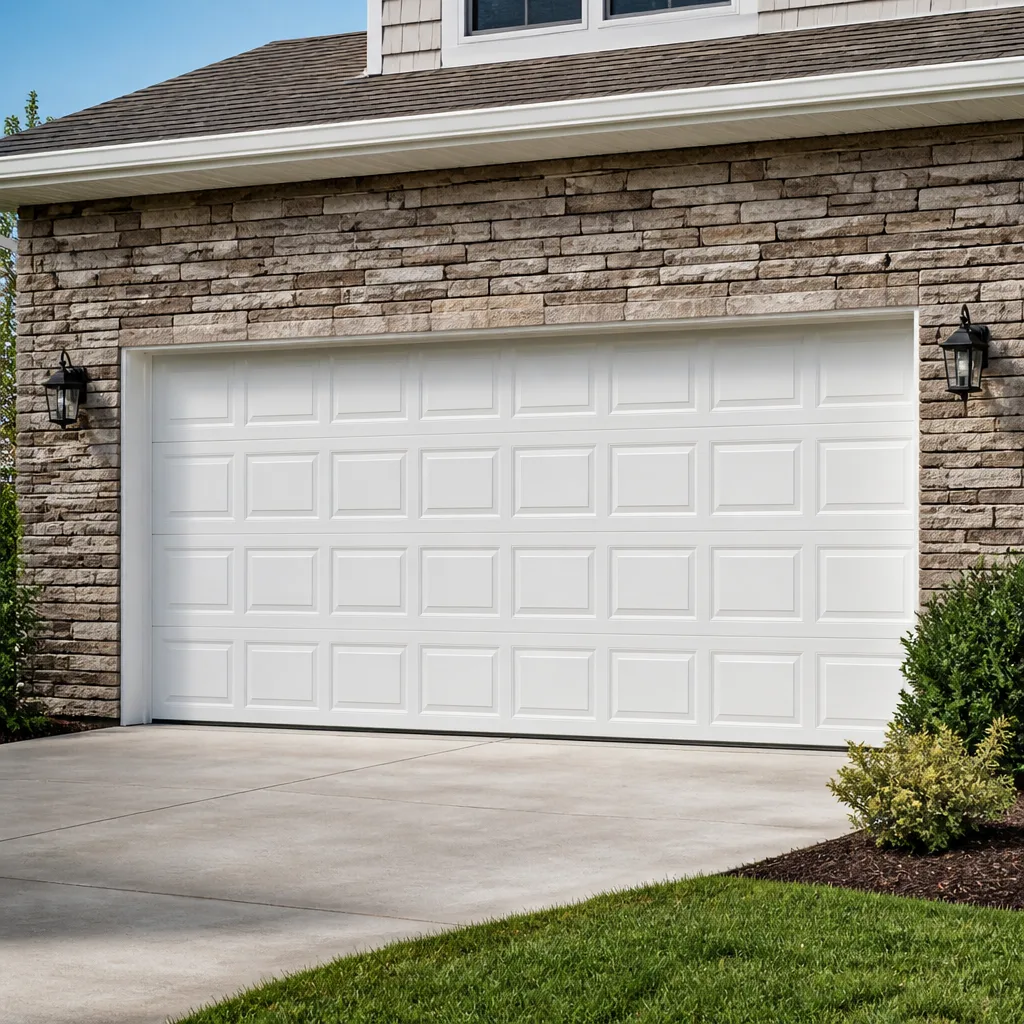 Raised-panel steel
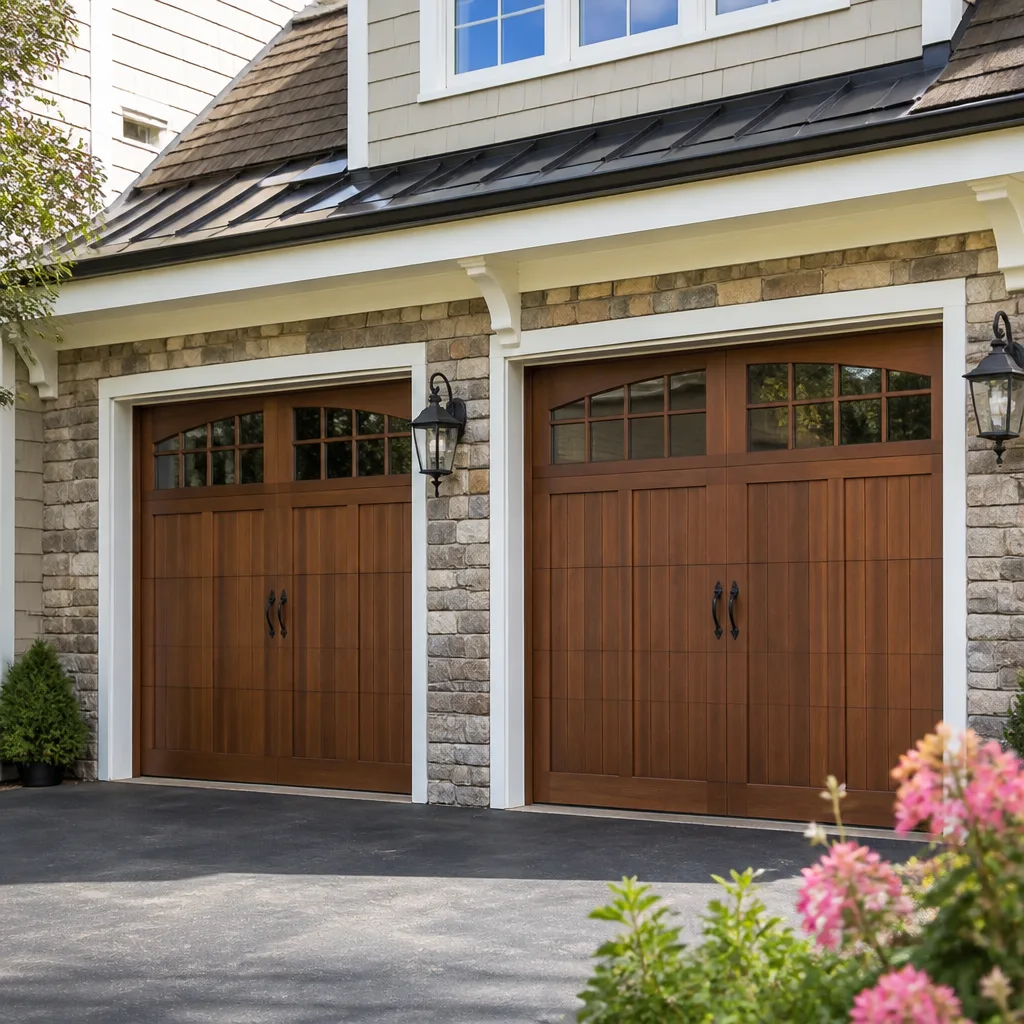 Carriage house
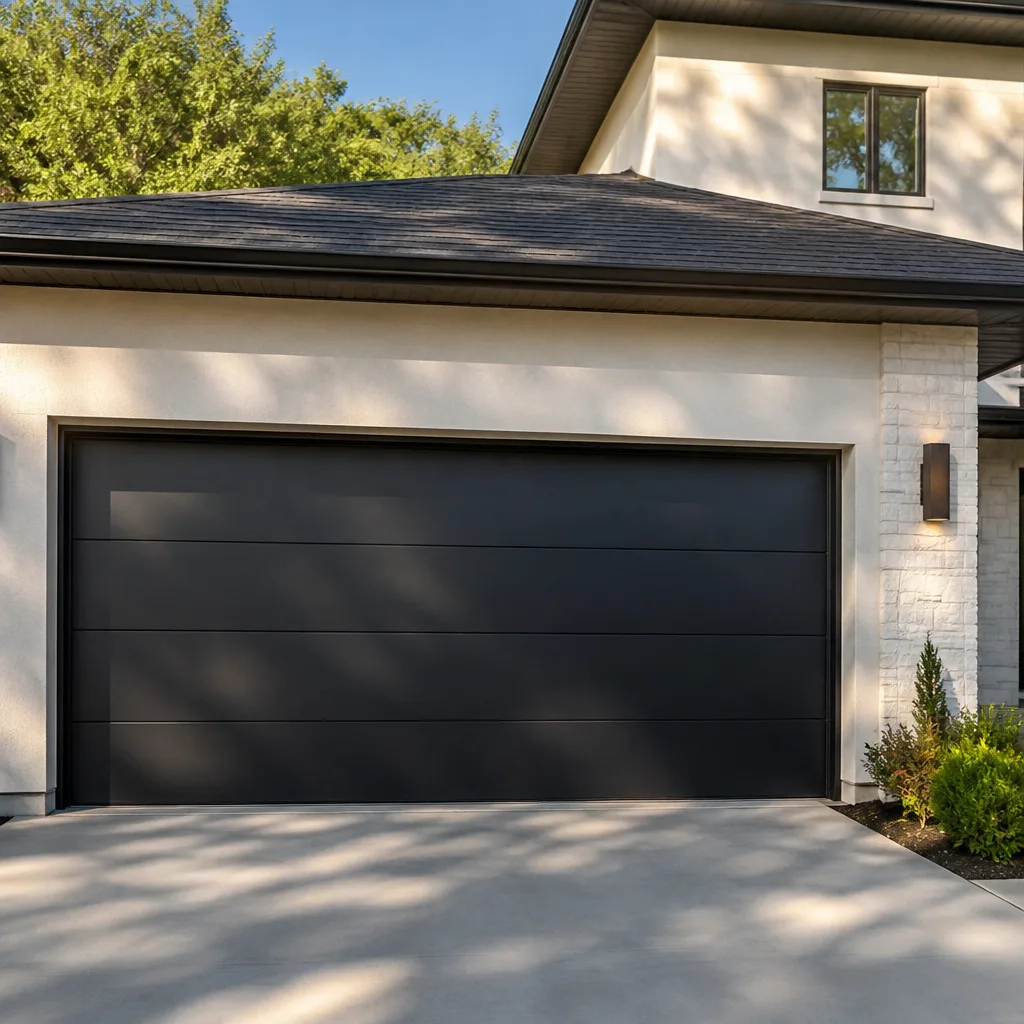 Modern flush
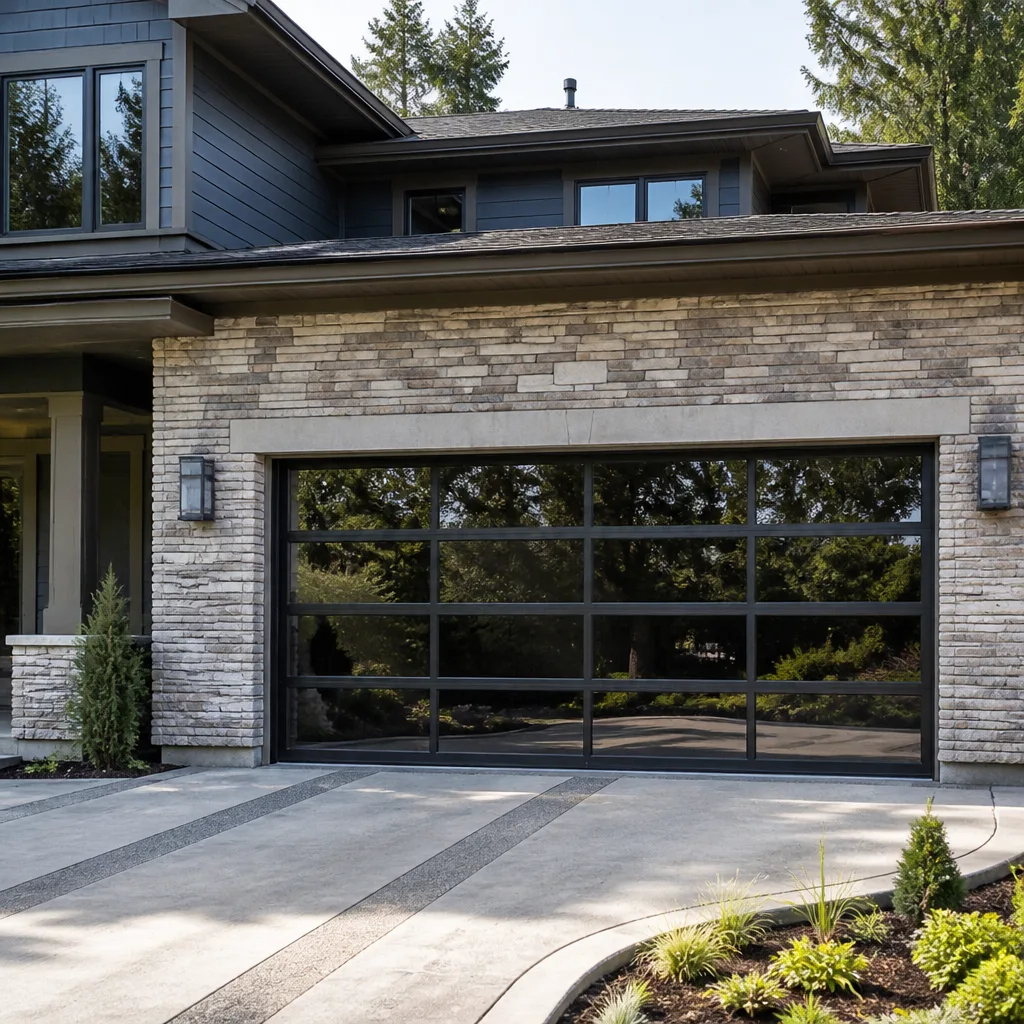 Full-view glass
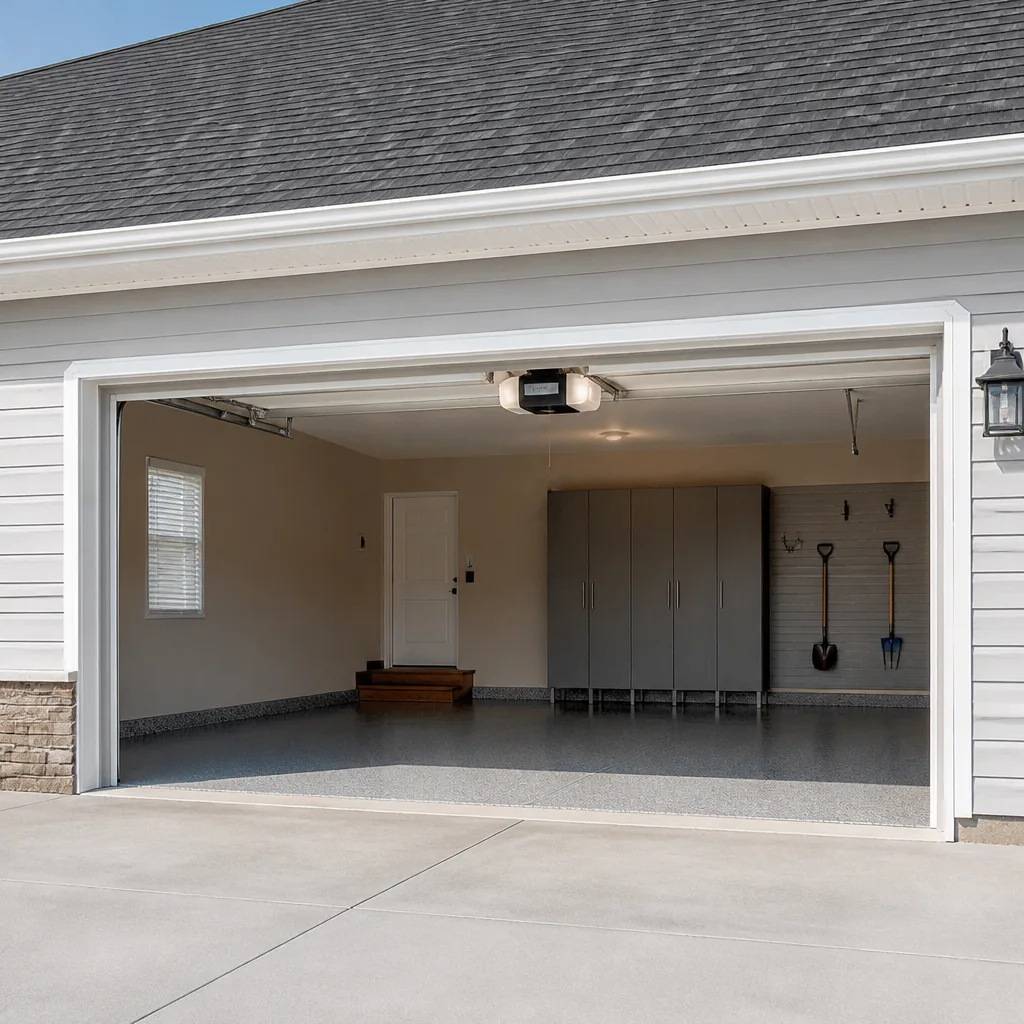 LiftMaster openers
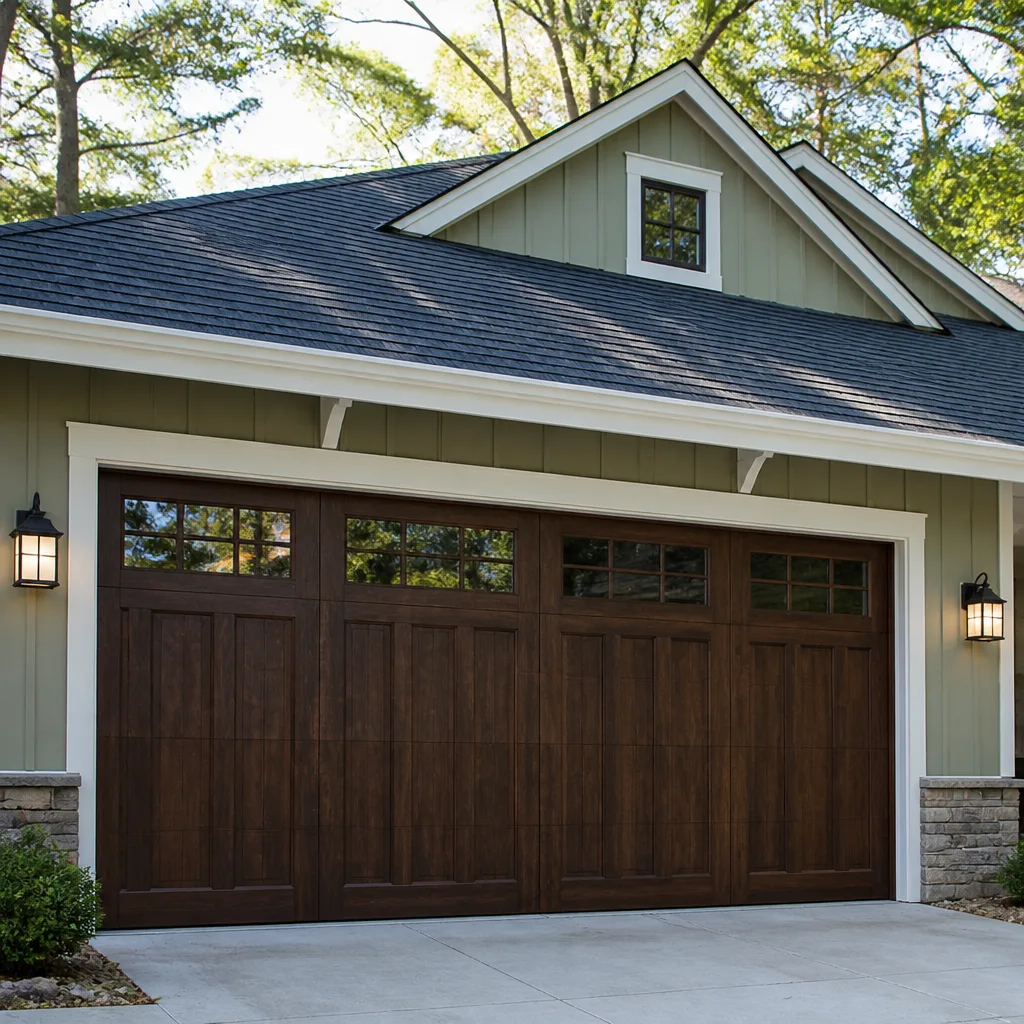 Chamberlain openers
Full 25-point door and opener safety check with every visit - springs, cables, rollers, tracks, and your LiftMaster or Chamberlain opener included
You get a price before we start. It does not change when the pro arrives.
Get your free estimateGarage Door Emergency Preparedness Guide for West Hartford Homes
If your car is inside a garage with a broken torsion spring, you can manually release the door. But if you’ve never done it before, the wrong technique on an unbalanced door risks a 200-pound panel coming down on you. That’s the counterintuitive part of garage door emergencies: the moment you most want to act fast is the moment you should slow down and know the sequence cold. Most West Hartford homeowners have no plan until they’re standing in the driveway at 6 AM with a car they can’t get out and a phone number they found in a panic. This guide replaces that panic with preparation. You’ll learn the exact manual release steps, what to tell a technician so the right parts arrive on the first visit, how to handle a power outage and secure the door afterward, what to document before anything breaks, and how to judge an emergency quote fairly. Read it once now, and a failure becomes a managed inconvenience instead of a crisis.
Quick Answer
A garage door emergency in West Hartford is best handled by first making the doorway safe, then calling for professional repair rather than forcing the door. If you have a broken spring, do not try to lift the door by hand to open it; instead release the opener and follow the manual release sequence only if you understand the door’s balance. Then call (855) 814-3469. We answer 24/7, and fast dispatch runs from 7am to 7pm, Sunday through Friday. Preparation before a failure, not improvisation during one, is what keeps a bad morning from becoming a dangerous one.
Styles & brands we work with
- Raised-panel steel
- Carriage house
- Modern flush
- Full-view glass
- LiftMaster openers
- Chamberlain openers
Table of Contents
- How Do You Manually Release a Garage Door With a Broken Spring?
- What’s the Protocol for a Power Outage in West Hartford?
- What Should You Tell a Technician When You Call?
- What Should Every Homeowner Document Before Anything Breaks?
- How Do You Evaluate an Emergency Quote Under Pressure?
- How Does West Hartford Weather Stress a Garage Door?
- How Do You Secure a Door That Won’t Close?
- Common Mistakes to Avoid
How Do You Manually Release a Garage Door With a Broken Spring?
Before anything else: a door with a broken spring is no longer balanced, and that changes everything about how you move it. The spring is what counterweights the door’s weight. When it snaps, the full weight of the door rests on the opener and on you if you grab it. A single panel can weigh close to 200 pounds, and an unbalanced door can crash down fast. So the honest answer is that manual release is a real option, but only with the right technique and the right amount of force, and sometimes the right call is to stop and wait for a technician.
Here is the sequence that applies to most residential doors, in general terms. We’re describing what’s involved, not teaching a beginner to override a loaded spring:
- Clear the area first. Make sure no one, especially a child or pet, is under or near the door. An unbalanced door can drop without warning.
- Locate the release cord. On most openers, a red or T-shaped handle hangs from the carriage on the rail. This disconnects the door from the opener, not from the spring.
- Stand to the side, not under the door. Pull the release handle straight down and slightly toward the opener. Stand clear of the door’s path.
- Test the balance with one hand before lifting. Lift a few inches with one hand at the bottom center. If it feels extremely heavy or drops when you let go, stop. The door is unbalanced and needs a professional.
- If it moves with steady, moderate effort, raise it slowly and fully, then prop or secure it before driving out.
The force question matters. A balanced door lifts with a light, even push. An unbalanced door with a snapped spring feels like dead weight, and if it takes real effort, that’s your signal to stop rather than heave. If you’re unsure at any point, leave the door where it is and call for help. We work on the brand you already have, including Wayne Dalton, Craftsman and Raynor doors common around West Hartford, so we can talk you through what’s safe and book a repair. For dedicated spring work, see our garage door spring repair page.
What’s the Protocol for a Power Outage in West Hartford?
An extended power outage turns your garage door into a manual door, and that’s fine for getting cars in and out, but it also leaves the door unlocked until power returns. The protocol has two parts: operate the door manually while the power is down, then secure it before you go to bed. West Hartford’s older housing stock, especially around the Colonial-era streets near the Center, means plenty of doors and openers that have seen many outages, so it’s worth knowing this cold.
Operating the door during an outage
- Pull the manual release cord (the red or T-handle) to disconnect the door from the opener. This lets you raise and lower it by hand.
- Lift with a steady, even push from the bottom center. If the door is balanced, it should move without strain.
- Lower it gently and don’t let it drop; support it down to the floor.
- Leave the release disengaged only while the power is out. Once power returns, re-engage it by running the opener so the carriage reconnects.
Securing a manually-operated door
Once a door is disconnected from the opener, it no longer locks automatically. If the power is out overnight, slide a manual locking bar or a sturdy bar through the track just above a roller on each side, or place a lock through the door’s track. That prevents someone from lifting the door from outside. If your door has no manual lock, a heavy bar across the inside at floor level is a temporary measure. On doors equipped with a side lock or a LiftMaster-style auto-lock, check whether the lock releases when de-energized; some do, which is precisely when you need a physical backup.
The other thing to plan for: a door that’s stuck open during a storm. If you can’t lower it by hand because the spring is broken, secure the opening as best you can and call us. When the door won’t move, we move fast. We answer 24/7, with fast dispatch from 7am to 7pm, Sunday through Friday.
What Should You Tell a Technician When You Call?
The single most useful thing you can do before dialing is gather three facts: your spring type, an estimate of your door’s weight, and your opener brand. Those three details are what let a dispatcher give you an accurate arrival window and load the right parts, so the repair isn’t delayed by a second trip. In our experience, a caller who knows these things gets a faster, cleaner fix than one who says only “it’s broken.”
The three details that matter most
- Spring type. Torsion springs mount horizontally above the door on a shaft; extension springs run along the sides on tracks. Torsion and extension springs fail differently and take different replacement parts. If you can, note how many springs you have and which kind.
- Door weight estimate. A single-car door is lighter than a double. Steel, wood and insulated doors differ too. You don’t need a scale; “single steel door” or “double wood door” is enough to plan the job.
- Opener brand and model. Check the opener housing for the brand. LiftMaster, Chamberlain, Genie, Craftsman and Raynor are the most common in this area. The model number is usually on a label on the motor unit or the back of the housing.
Also tell them
- Whether the door is stuck open, stuck closed, or partially down. A door stuck open overnight is a security issue and gets prioritized.
- Whether the door is currently disconnected from the opener.
- Any unusual noise, like a bang or snap before it stopped working.
We’re factory-familiar with the major brands, including LiftMaster, Chamberlain, Genie and Clopay, so brand-specific details help us diagnose by logic instead of guesswork. Have this short list ready and a call takes two minutes instead of ten. For opener-specific problems, our garage door opener repair page covers the diagnosis side.
What Should Every Homeowner Document Before Anything Breaks?
Two pieces of information, documented now, will save you time and stress later: your door’s spring specifications and your opener’s model number. This is the pre-emergency inventory that turns a 6 AM scramble into a two-minute phone call. We suggest keeping it in a note on your phone and a paper copy in a kitchen drawer, because during an outage your phone charger is exactly what’s not working.
Your door’s spring specifications
- Spring type: torsion (on a shaft above the door) or extension (along the sides).
- How many springs the door has. Matched pairs are common on double doors and are usually replaced together.
- The color painted on the end of a torsion spring, which indicates its wire gauge and size.
- The door’s width and height, and whether it’s single or double.
- The door material and whether it’s insulated.
Your opener’s model number
- The brand name on the motor housing.
- The model number from the label on the motor unit or the back panel.
- Whether it’s a belt, chain or screw drive.
- Whether it’s a smart opener and which app or hub it connects to.
One caution about the spring: never touch, wind or unwind a torsion spring to inspect it. The tension stored in a wound spring is dangerous, and adjustments happen only by trained technicians with the right tools. Note the color and type from a safe distance with the door closed. Spring work is a safety job, and it’s one we handle as a dedicated service. For the full range of what we repair, see garage door repair.
How Do You Evaluate an Emergency Quote Under Pressure?
You can judge any garage door quote by two numbers: the itemized parts-and-labor figure for the specific repair, and the total. A fair quote breaks those out clearly and doesn’t change once the technician sees the door. A predatory one is vague, inflates under urgency, or adds charges you didn’t agree to. Urgency is exactly when that distinction gets blurry, so go in knowing what a fair quote looks like.
What a fair emergency quote contains
- A line for the specific part, such as one torsion spring, with its own price.
- A separate line for labor.
- A stated total, given to you before any work starts.
- Clarity on whether it’s one spring or a matched pair. A pair costs roughly twice a single spring, and that should be spelled out, not buried.
Red flags to watch
- A price that’s only a lump sum with no itemization.
- Pressure to approve before you’ve seen the breakdown.
- A quote that changes once the technician is on-site for reasons that weren’t mentioned on the phone.
- No written confirmation of the price.
Our commitment is simple: the price is quoted and agreed before any work starts, and the written estimate sets the final price. On this page we’re talking about what a fair quote looks like in principle, not quoting a local rate. If a number sounds off, get it in writing and compare. A professional won’t hesitate. Call (855) 814-3469 for an exact quote; estimates are free.
How Does West Hartford Weather Stress a Garage Door?
West Hartford’s freeze-and-thaw cycles are hard on garage door hardware in a way that homeowners don’t always connect to the season. A Connecticut winter swings above and below freezing repeatedly, and that cycling works on the metal in your tracks, hinges and springs. Add a few heavy snowfalls and the weight of snow against the door, and spring failures cluster around the cold months and the first warm days that follow.
What the seasons do to a door
- Winter cold makes metal brittle and stiffens lubricant, so rollers and hinges drag and the opener works harder.
- Freeze-and-thaw can shift the concrete at the door’s base, throwing a track slightly out of line.
- Snow and ice build up against the bottom seal and can block the door from closing fully, which trips the safety reverse.
- Spring thaw is when accumulated stress on a fatigued spring tends to show up as a snap.
The preparation that helps most is simple: keep the tracks clear of debris, wipe old lubricant off the rollers and reapply a garage-door lubricant, and clear snow and ice from the base before running the door. Don’t force a frozen door open; that’s how tracks bend. If you hear a loud bang from the garage and the door won’t lift, that’s usually a spring, and it’s a call-in situation, not a fix-it-yourself one. If you’re planning a deliberate upgrade rather than a repair, this is also the season to look at garage door repair options and a full new-door install when the frame or panels are past their useful life.
How Do You Secure a Door That Won’t Close?
A door stuck open is a security problem first and a repair problem second, so secure the opening before you worry about the fix. In a West Hartford neighborhood, an open garage at night exposes everything inside, and a door that won’t close is the most common “urgent” call we get after dark. The goal is to close the gap or block access until a technician arrives.
Temporary steps to secure an open door
- Lower the door by hand if it’s safe. If the spring is intact and the door is merely off its opener, disconnect and guide it down gently.
- Check the safety sensors. A door that reverses immediately usually has a misaligned or blocked sensor near the floor. Clear the path and check that the two sensors face each other.
- If it won’t close, block the opening. Park a car close to the opening, or place a heavy barrier, until help arrives.
- Disconnect the opener so the door can’t be triggered remotely by a stray signal.
If a panel is jammed or a track is bent, don’t force the door down; you’ll do more damage and risk a pinch injury. That’s a job for a technician with the door’s brand and weight in mind. We handle both sides of the door system, the door and the opener, so you’re not chasing two vendors at 10 PM. When the door won’t move, we move fast. Call (855) 814-3469. We answer 24/7, and fast dispatch from 7am to 7pm, Sunday through Friday.
Common Mistakes to Avoid
- Trying to fix a broken torsion spring yourself. The stored tension in a wound torsion spring is dangerous and adjustments belong to trained technicians. Winding or unwinding one without the right tools is how serious injuries happen, so treat any spring job as a call-in.
- Forcing an unbalanced door by hand. If a door takes real effort to lift after a spring snaps, stop. Heaving on it can let a heavy panel drop, and it does nothing to fix the actual problem.
- Not knowing your own door. Calling without the spring type, door weight and opener brand means the technician may arrive without the right part. Document these before anything breaks, not during a crisis.
- Ignoring a door left disconnected after an outage. Once the power returns, re-engage the opener, or your door is unlocked. A disconnected door with no manual lock is an open invitation.
- Taking the first quote in a panic. Ask for the parts-and-labor breakdown and the total before work starts. A fair quote is itemized and doesn’t shift once the technician is on-site.
- Skipping snow and ice at the base. Running a door against a buildup of ice can bend a track or burn out the opener. Clear the base before operating the door in a West Hartford winter.
- Letting a dragging door go unaddressed. A door that grinds or hesitates is telling you a roller, hinge or spring is stressed. That early warning is cheap to fix; a snapped spring at 6 AM is not.
See the difference
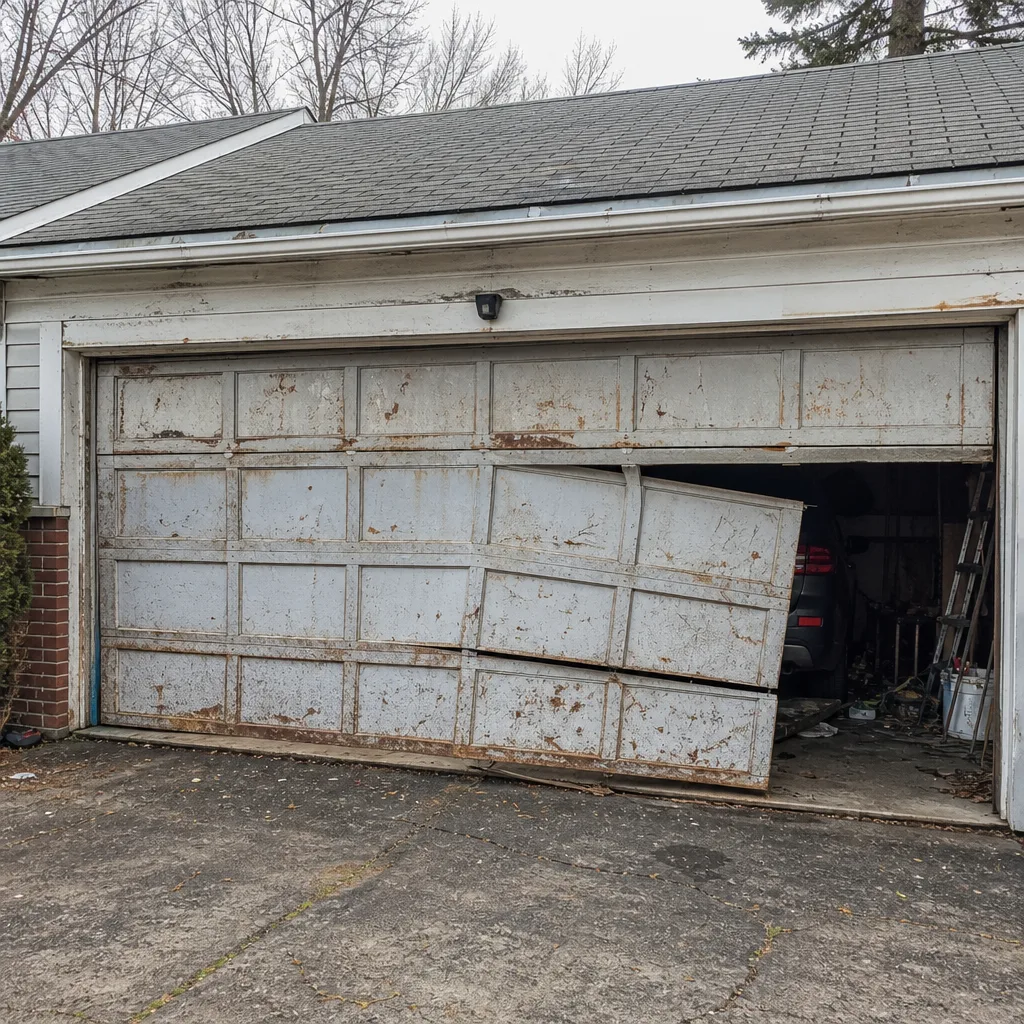 Before
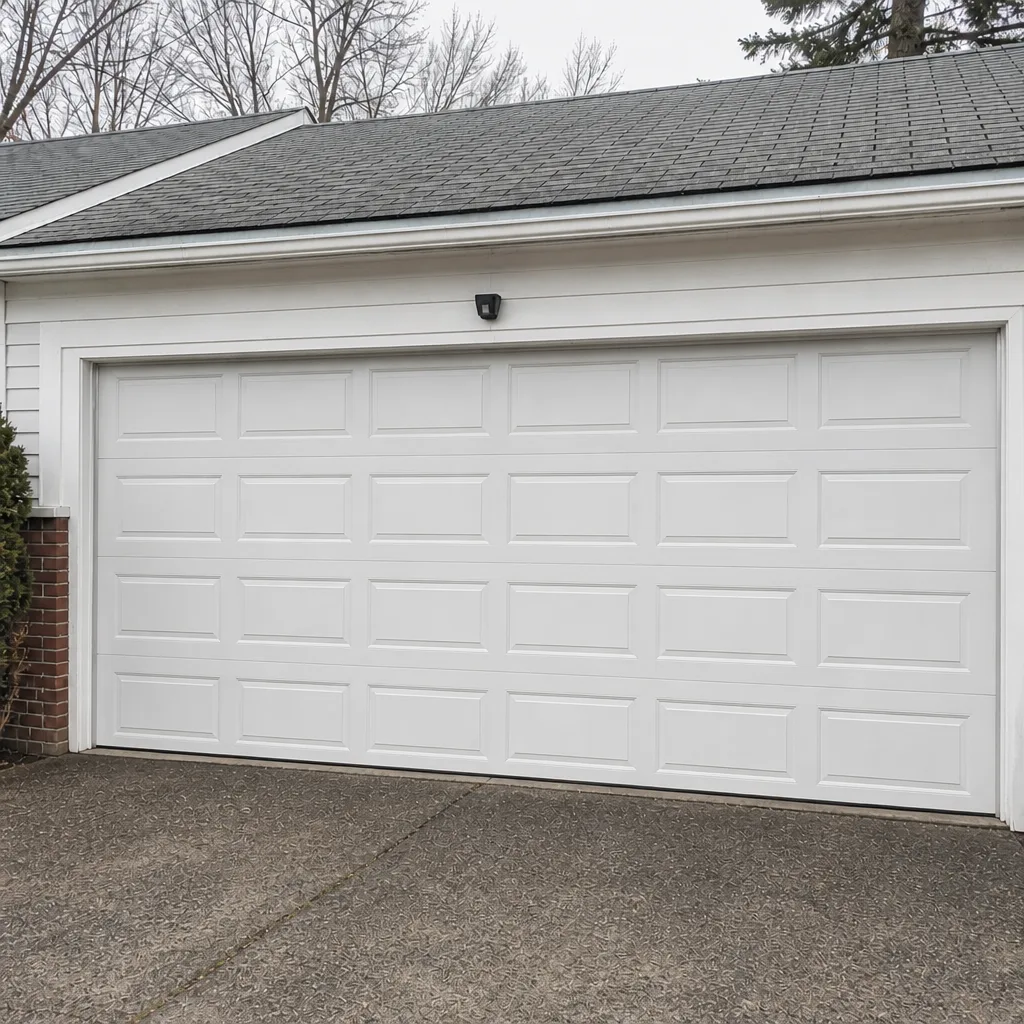 After
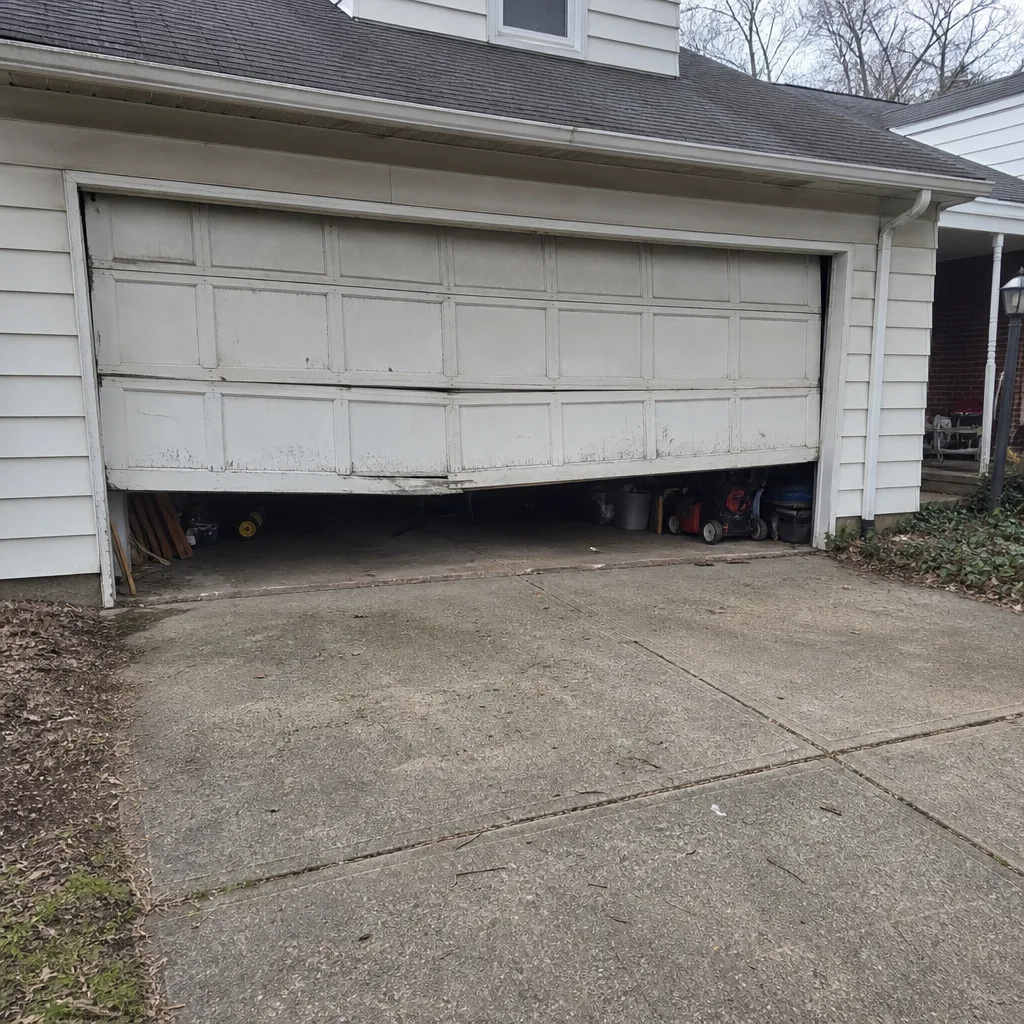 Before
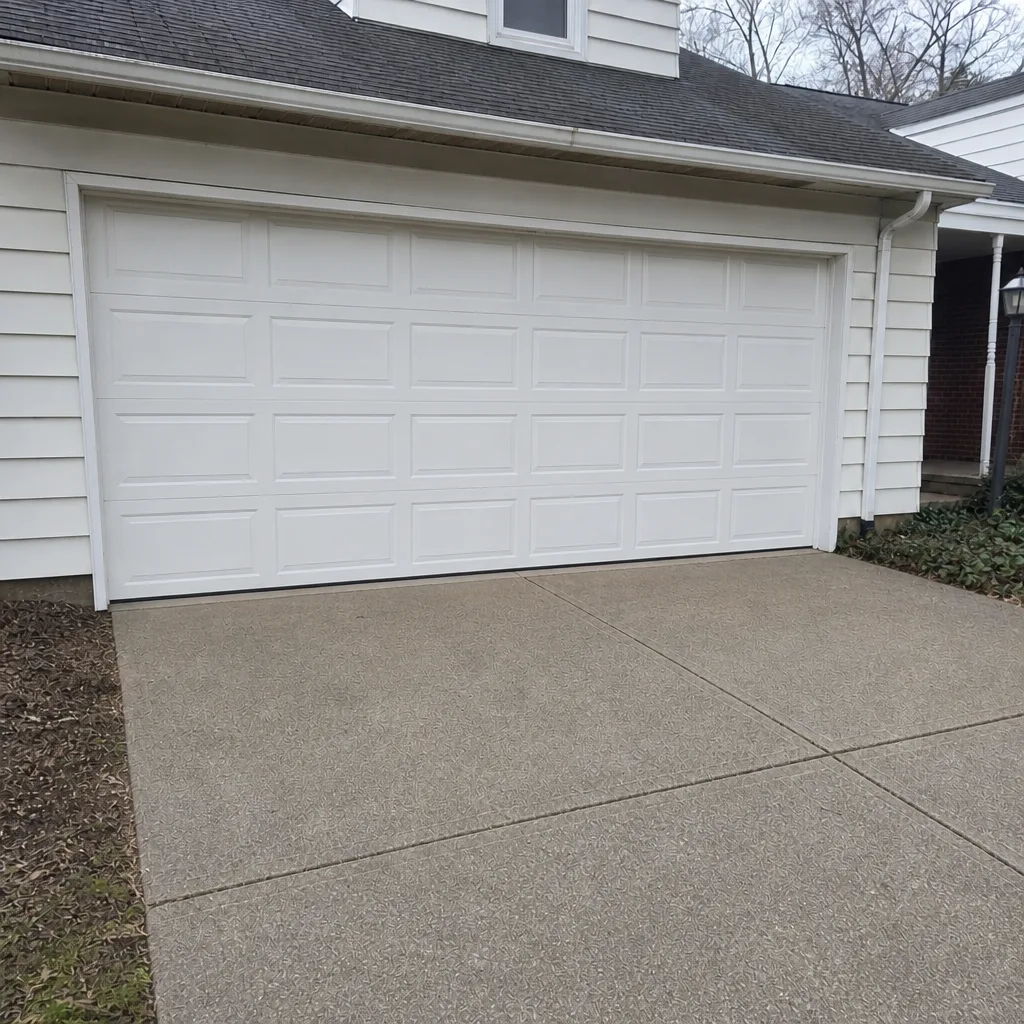 After
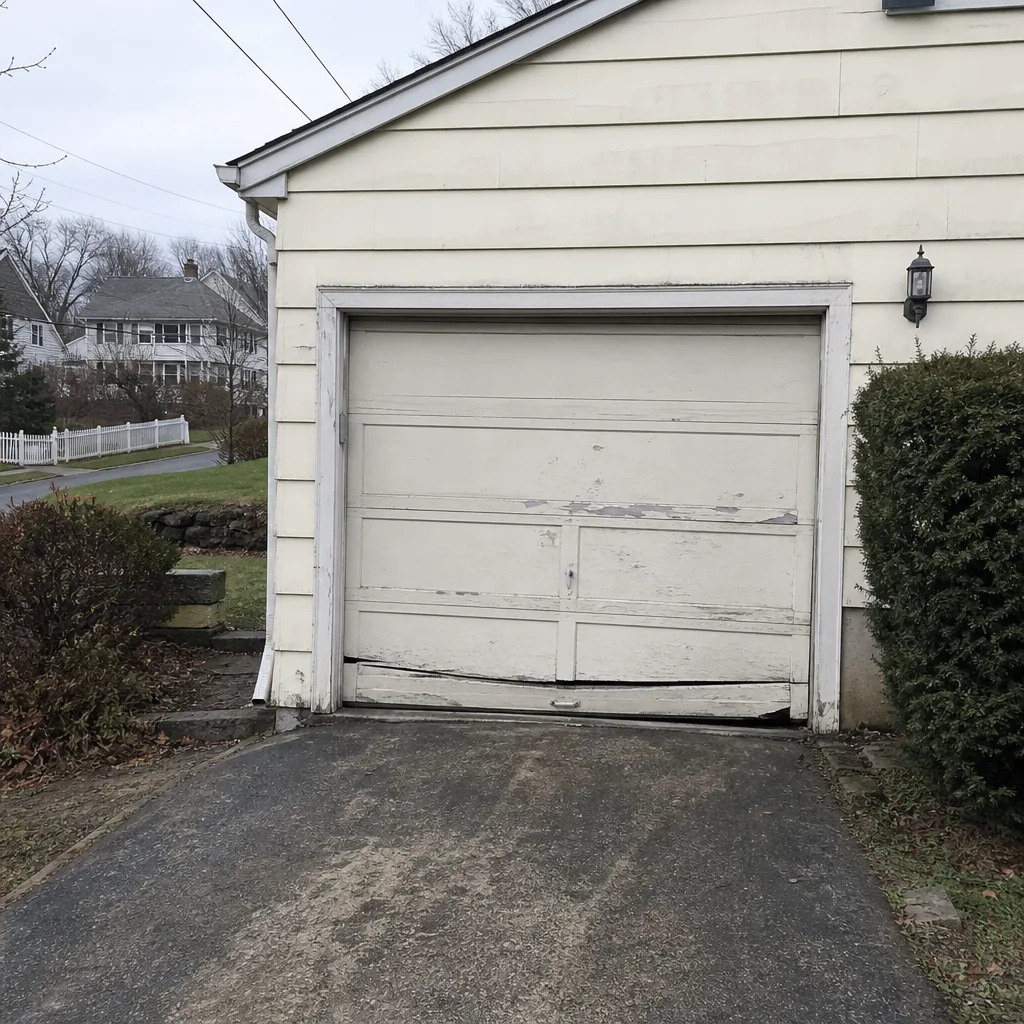 Before
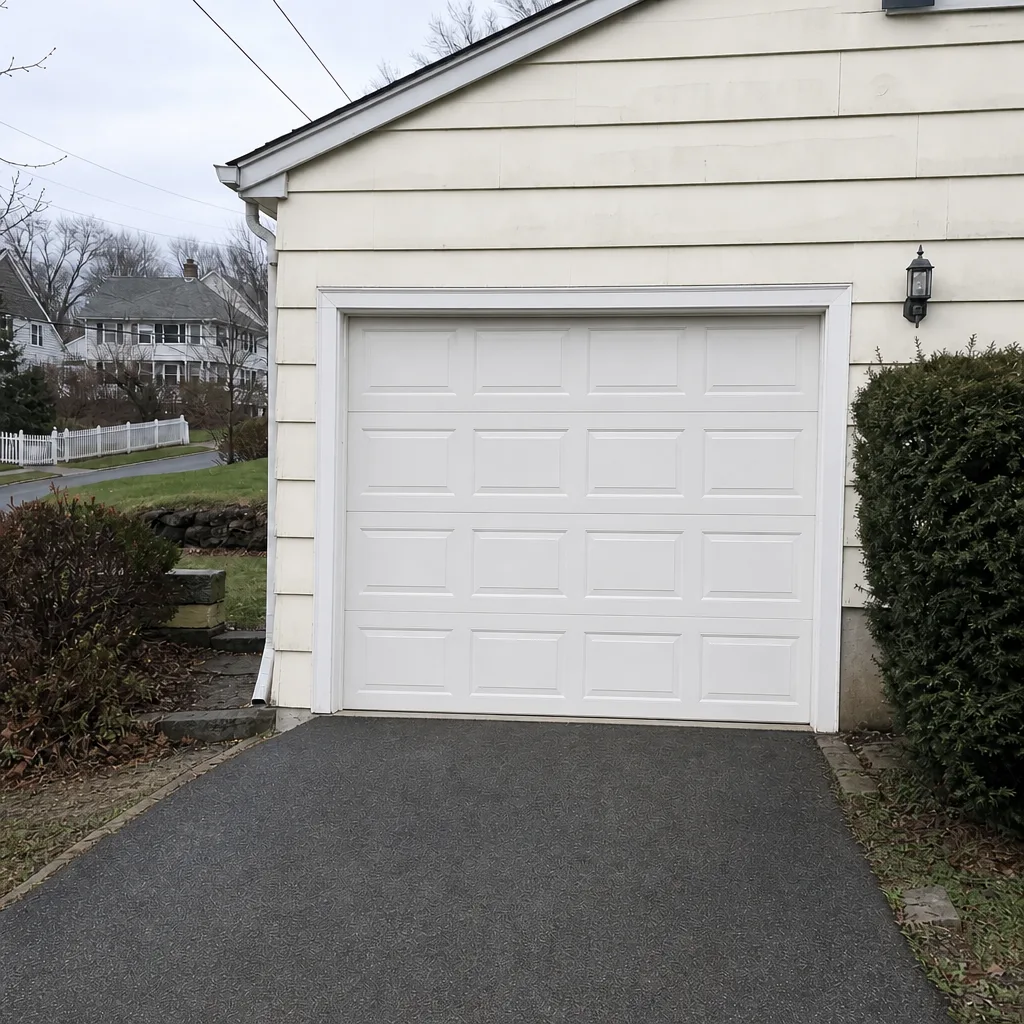 After
When to Call a Professional
Some garage door problems are a nuisance and some are genuinely dangerous, and knowing which is which is the whole point of being prepared. Call a professional for any broken torsion or extension spring, a door that has come off its track, a door that won’t balance when disconnected, a snapped cable, a door stuck open overnight, or any panel that’s come loose or bent. These aren’t jobs for a homeowner, and spring work in particular is a safety job we treat as its own specialty. When the door won’t move, we move fast: we answer 24/7, and fast dispatch runs from 7am to 7pm, Sunday through Friday. West Hartford Garage Door Repair offers free estimates in West Hartford. Call (855) 814-3469.
Frequently Asked Questions
You can release the door from the opener and lift it by hand, but only if it moves with steady, moderate effort and you’re prepared to stop if it feels like dead weight. A door with a broken spring is unbalanced, and a panel can weigh close to 200 pounds, so if it takes real force to lift, don’t heave it; call a technician. Call (855) 814-3469 for an exact quote – estimates are free.
Pricing is set per job by the written estimate, so the fairest way to know is a free estimate with the breakdown in writing before any work starts. The itemized quote should show the specific part, such as one torsion spring with its own price, a separate labor line, and a stated total. Remember that a matched pair of springs costs roughly twice a single spring and is often replaced together. Call (855) 814-3469 for an exact quote – estimates are free.
Tell them your spring type, an estimate of your door’s weight, and your opener’s brand and model; those three details get you an accurate arrival window and the right parts on the first visit. Add whether the door is stuck open or shut and whether it’s disconnected from the opener. That short list speeds the whole repair. Call (855) 814-3469 for an exact quote – estimates are free.
No. The price is quoted and agreed before any work starts, and the written estimate sets the final price. A professional quote is itemized and stable once the technician is on-site, so if a number shifts for reasons that weren’t discussed on the phone, that’s a reason to ask why. Call (855) 814-3469 for an exact quote – estimates are free.
Yes. The local professionals we connect you with are licensed and insured as their state requires, and our technicians have up to 12 years of experience. That matters most on safety-critical work like spring repair, where the wrong technique is genuinely hazardous. Call (855) 814-3469 for an exact quote – estimates are free.
Disconnect the door from the opener with the manual release cord to operate it by hand, then add a physical lock, such as a locking bar through the track or a manual lock, because a disconnected door no longer locks automatically. Re-engage the opener once power returns. Call (855) 814-3469 for an exact quote – estimates are free.
The Bottom Line
A garage door emergency is far easier to handle when you’ve done the thinking beforehand. Know your spring type, your door’s weight and your opener’s brand. Know the manual release sequence and the moment to stop and call instead. Know that a door stuck open needs securing first. And know that a fair quote is itemized and agreed in writing before work starts. Prepared with those things, a broken spring at 6 AM becomes a managed inconvenience instead of a crisis. We’re here to help you get there, and our team at West Hartford Garage Door Repair can back that up.
Call (855) 814-3469 for a free estimate. We answer 24/7. Fast dispatch from 7am to 7pm, Sunday through Friday. The price is quoted and agreed before any work starts, and the written estimate sets the final price.
Written by the team at West Hartford Garage Door Repair.