
Last updated November 24, 2026
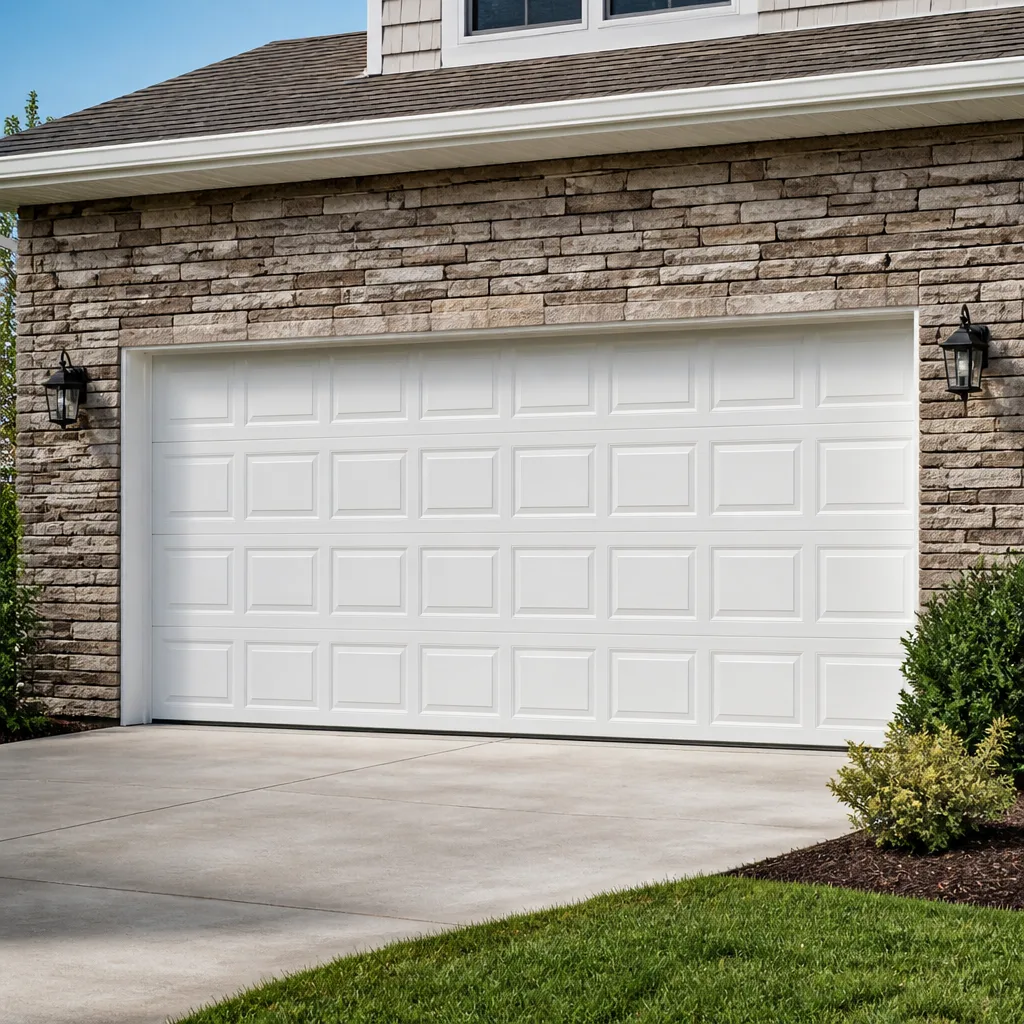 Raised-panel steel
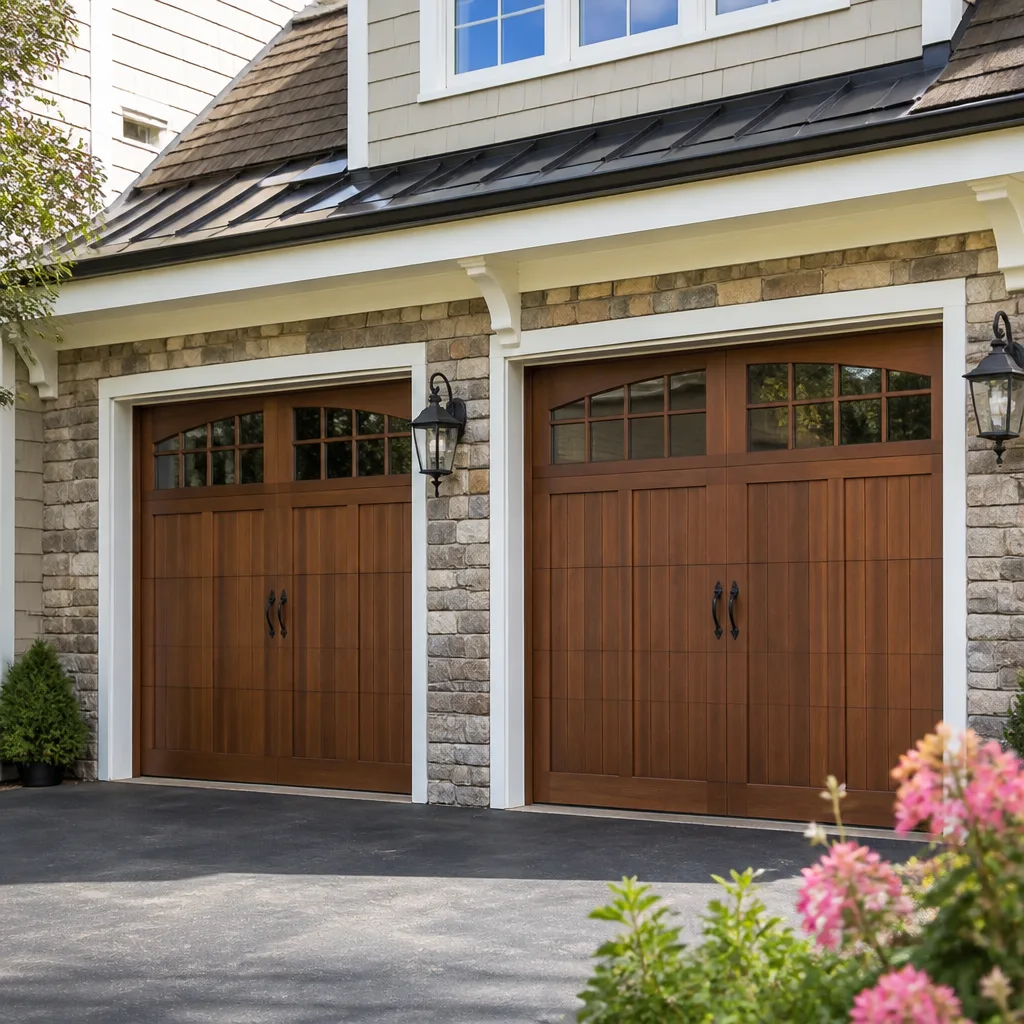 Carriage house
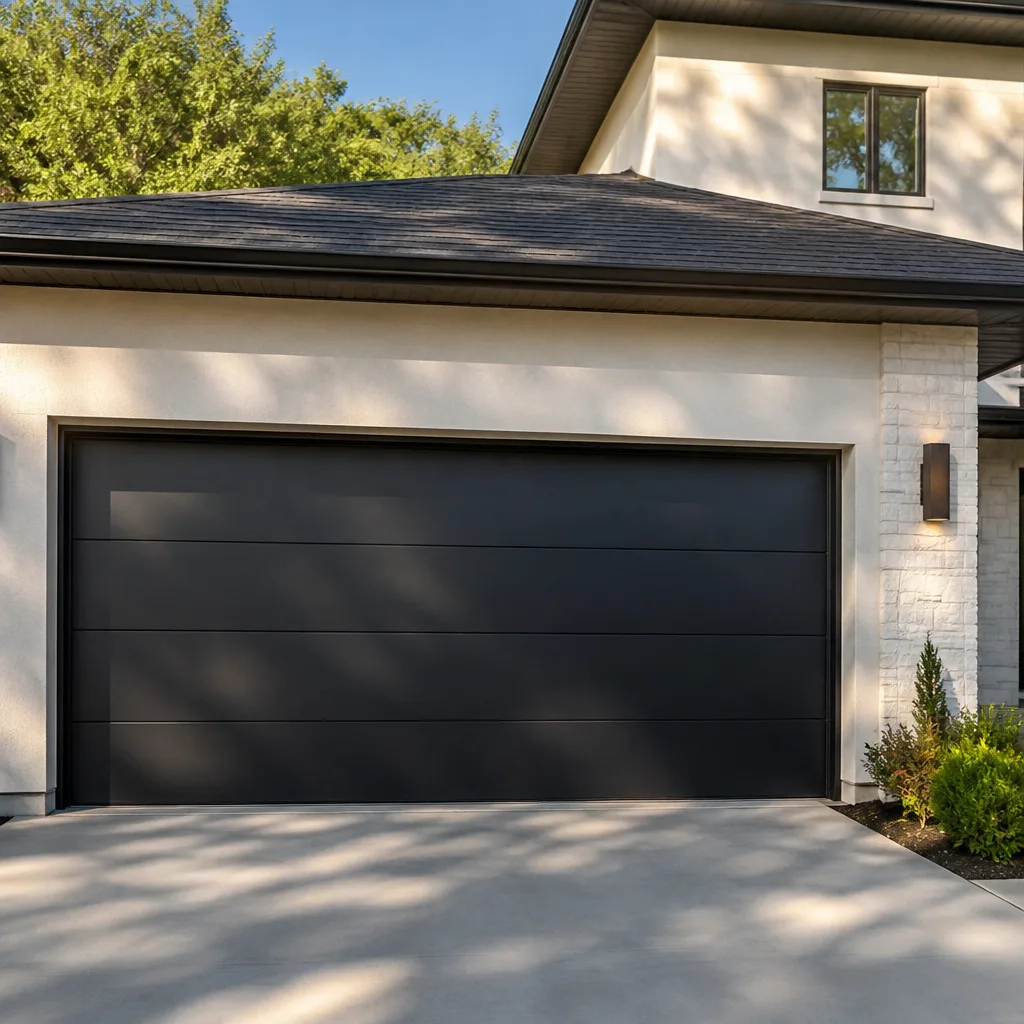 Modern flush
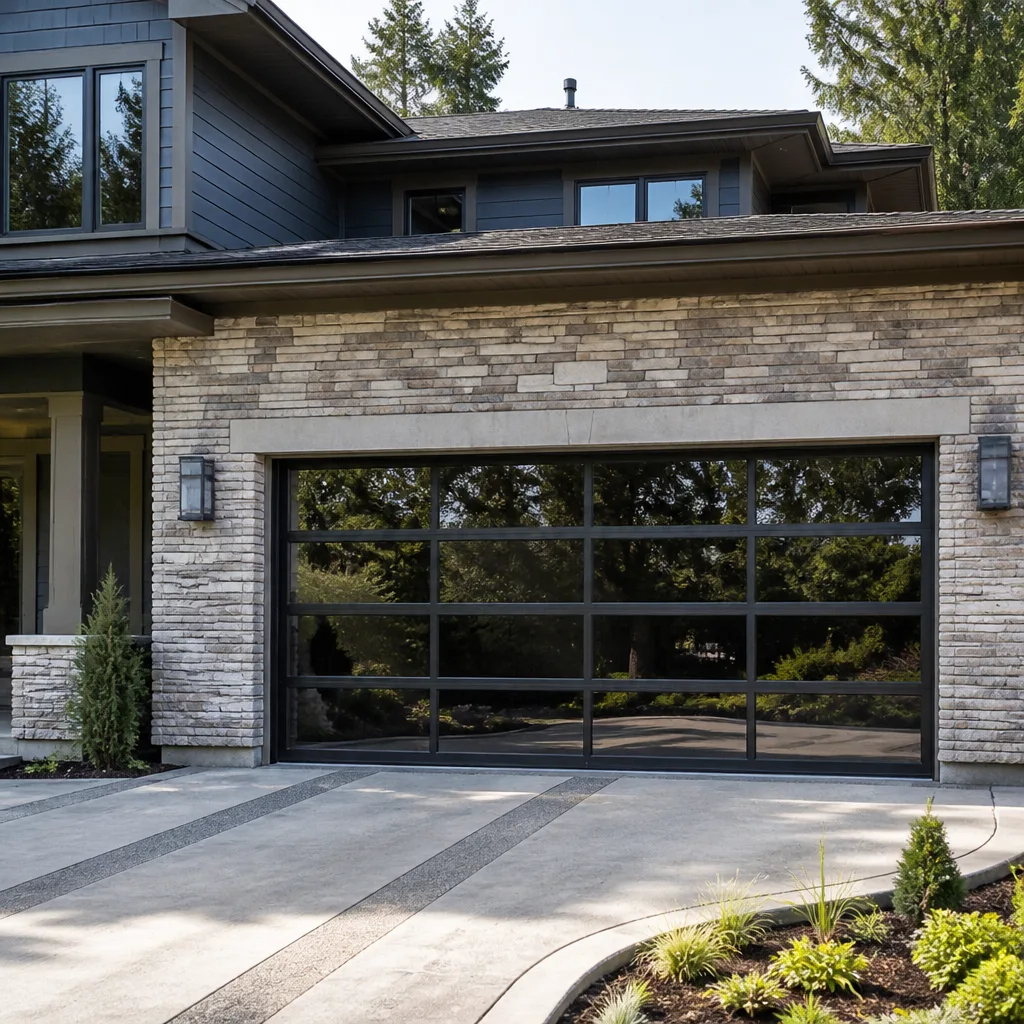 Full-view glass
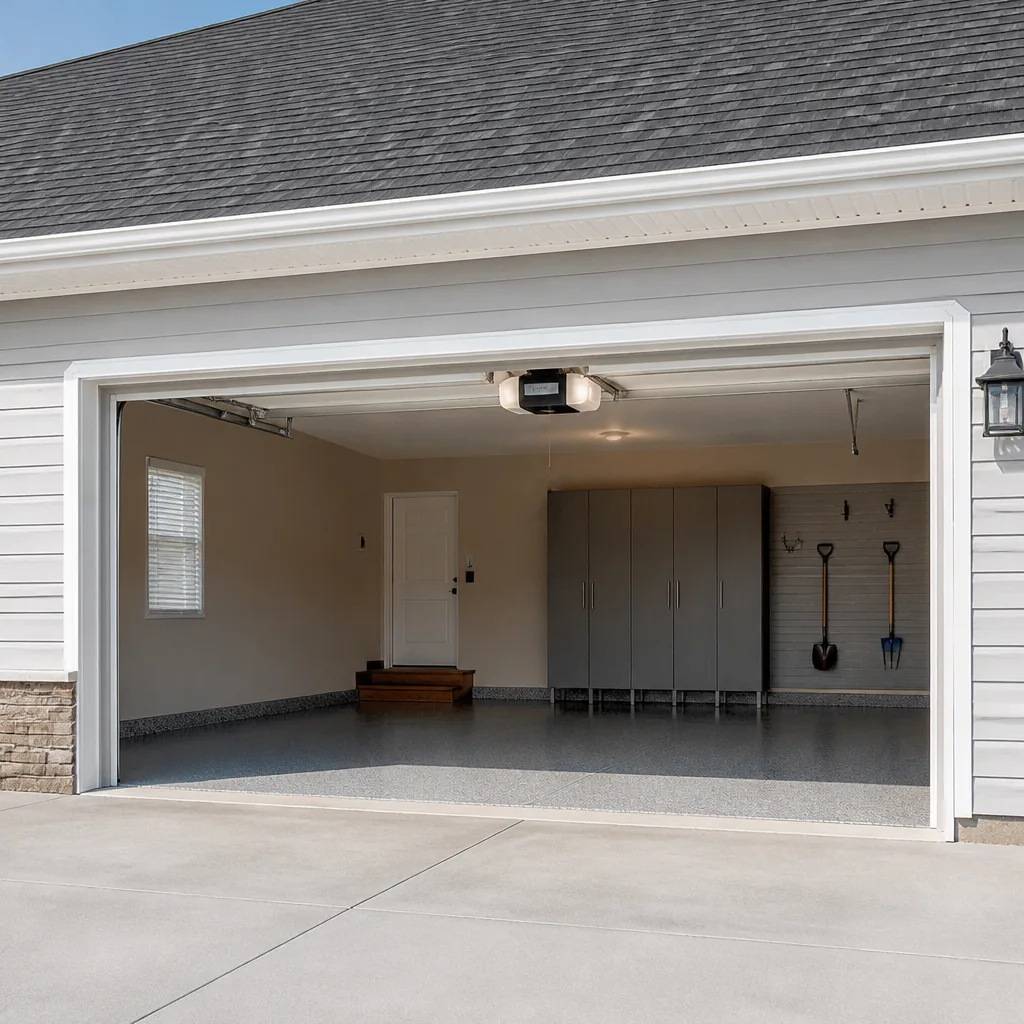 LiftMaster openers
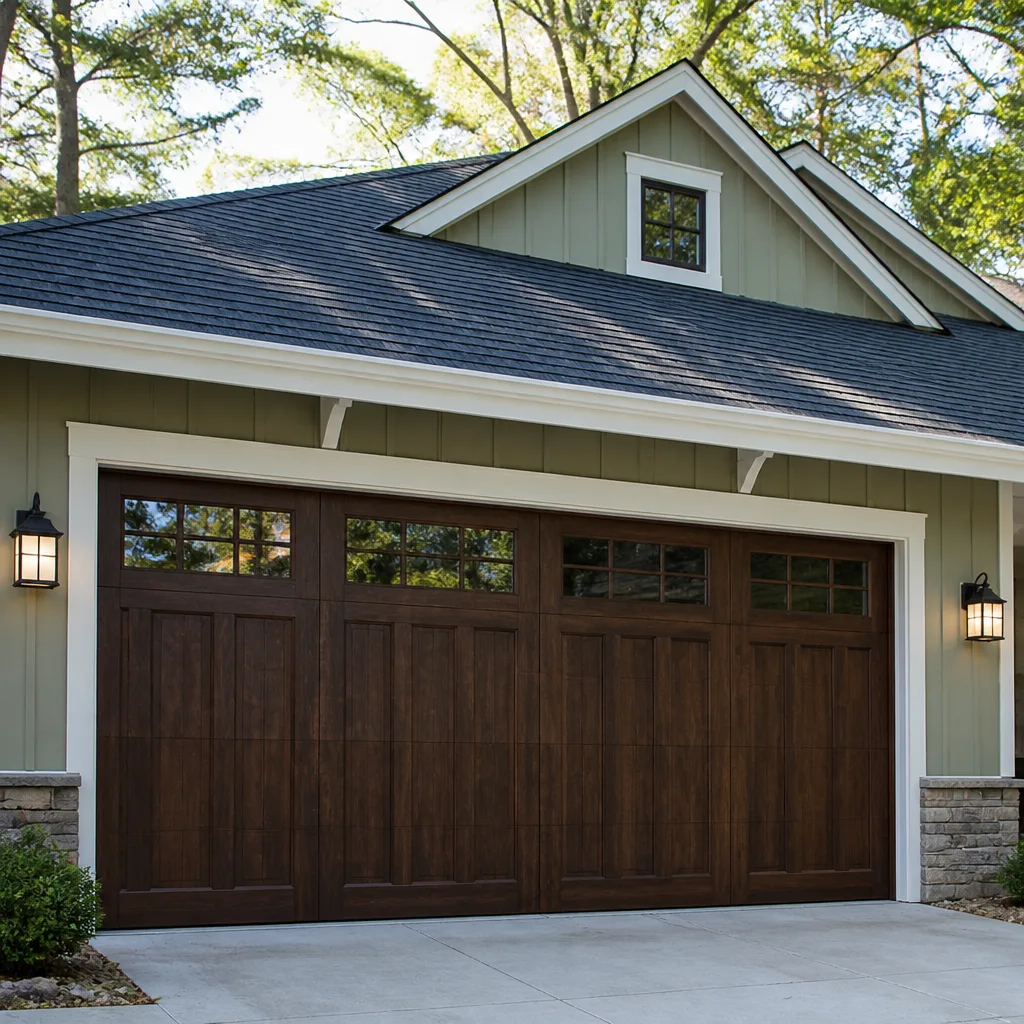 Chamberlain openers
Full 25-point door and opener safety check with every visit - springs, cables, rollers, tracks, and your LiftMaster or Chamberlain opener included
You get a price before we start. It does not change when the pro arrives.
Get your free estimateThe Complete Guide to Garage Doors in West Hartford
Most West Hartford homeowners discover their garage opening is a non-standard size only after they’ve already ordered a door. That’s the trap. A colonial built in the 1930s or a split-level from the 1950s was framed before 8-foot-wide single doors became the default, and the header clearance and rough opening behind that trim rarely match what a showroom measurement assumes. We’ve seen it on block after block in West Hartford, from Elmwood to Bishops Corner to the streets around Elizabeth Park. In this guide we’ll walk through how local construction shapes your replacement options, which materials survive a Hartford County freeze-thaw cycle, when a repair still makes sense, and what to check before you spend money on anything. This is written for the homeowner who wants to understand the system, not just hand it off.
Quick Answer
Garage door work in West Hartford splits into two paths: repair what you have, or replace it. Repair makes sense when the door structure and track are sound and the failure is mechanical – springs, opener, rollers, cables. Replacement makes sense when the panels are structurally compromised, the rough opening needs correction, or you’re upgrading for insulation and quiet. Most single-spring repairs run in the low hundreds of dollars, a new door installed runs into the low thousands, and the written estimate you get before work begins sets the final price. Spring and cable work is a safety job: torsion springs are under extreme tension and belong to trained technicians.
Styles & brands we work with
- Raised-panel steel
- Carriage house
- Modern flush
- Full-view glass
- LiftMaster openers
- Chamberlain openers
Table of Contents
- How West Hartford’s Housing Stock Shapes Your Garage Door
- Rough Opening, Header Clearance, and Why Measurement Comes First
- Which Door Materials Hold Up to a Hartford County Winter
- How to Read Your Existing Hardware Before You Replace Anything
- Repair or Replace? The Lifecycle Cost Question
- Permits and Zoning: What West Hartford Requires for a Visible Door
- Brand Matters: Why We Ask What You Already Have
- Seasonal Care Through a Connecticut Year
How West Hartford’s Housing Stock Shapes Your Garage Door
West Hartford isn’t one housing market. It’s a dozen of them layered on top of each other, and each layer produces a different garage door problem. A 1920s colonial near Prospect Avenue often has an attached garage that was framed as an afterthought – shallow, low, and sized for a car far smaller than what’s in your driveway now. A mid-century split-level off Farmington Avenue tends to have a wider but shallower footprint with a low header. Newer construction in the outer neighborhoods gets closer to the modern default of an 8-foot-wide single or a 16-foot double, but even there the fit isn’t guaranteed.
Here’s what that history actually means for you:
- Pre-WWII colonials: Common to find 7-foot-wide or odd-width openings, low headroom under the header, and single torsion springs sized for a much lighter door than a modern insulated panel.
- Mid-century split-levels: Wide but shallow garages where headroom above the door is limited, which affects opener rail and torsion bar choices.
- Newer construction: Closer to standard sizing, but builders didn’t always frame to spec, so measuring still matters.
- Detached garages: Often unheated, uninsulated, and exposed to full weather on every wall, which changes which materials make sense.
We’ve seen plenty of West Hartford jobs where a homeowner ordered a standard door online, had it delivered, and then discovered the rough opening was two inches off. That’s a return shipment, a new order, and a week with no garage. Measure first. It’s the cheapest step in the whole process and the one most people skip.
Rough Opening, Header Clearance, and Why Measurement Comes First
Your garage door fits inside a rough opening, and that opening has three numbers that decide everything: width, height, and the headroom above the opening. Get any of them wrong and the door you ordered won’t go in. Here’s the order we measure in.
- Width, at three points. Measure inside the finished opening at the top, middle, and bottom. Older West Hartford homes are rarely square, and you take the smallest number.
- Height, at three points. Left, center, right. Again, the smallest number wins.
- Headroom. Measure from the top of the opening up to the lowest obstruction – the ceiling, a beam, a duct, the opener rail. Standard torsion doors need roughly 12 inches; low-headroom setups need special hardware.
- Backroom. How far back the door can travel on the track. A short garage forces a low-clearance or high-lift configuration.
- Sideroom. The space beside the opening for the torsion bar and springs. A narrow side wall can mean extension springs instead of torsion.
A colonial built before 8-foot doors were standard may have only 10 inches of headroom, which changes the spring type, the track radius, and whether your existing opener will even work with the new door. This is the single most common surprise in West Hartford replacement work. A free measure catches it before you spend a dollar on hardware.
Which Door Materials Hold Up to a Hartford County Winter
Connecticut’s freeze-thaw cycle is brutal on a north-facing garage door. Water gets into a seam or a hollow panel, freezes overnight, expands, and opens the seam a little wider. Repeat that a few hundred times over a winter and the damage compounds. A door that looks great in a showroom under warm light may be exactly the wrong choice for a garage that never sees the sun between November and March. Here’s how the common materials actually behave.
- Steel (insulated, bonded panels): Handles freeze-thaw well when the panels are bonded rather than laminated, because there’s no seam for water to work into. This is the workhorse choice on most West Hartford homes and the one most likely to hit a reasonable price point.
- Steel (uninsulated, hollow): Cheaper, but the hollow panels trap condensation and rust faster on a north-facing wall. It’s a poor fit for an unheated detached garage in this climate.
- Aluminum: Won’t rust, but dents more easily and offers weak insulation. Fine for a door that’s rarely used; not ideal for a daily-driver.
- Wood and wood-composite: Beautiful on the right colonial, but wood needs regular sealing against moisture and freeze-thaw. Composite over a steel frame gets you the look with less upkeep.
- Fiberglass and vinyl: Light and weather-resistant, but limited in style for a home where the door faces the street.
Insulation matters here beyond temperature. A north-facing garage door on a West Hartford colonial sits against a wall that shares space with the house, and an uninsulated door lets cold air sit against that wall all winter. A bonded steel door with a decent insulation core is usually the right answer, and the brand shorthand helps: Clopay and Amarr both build insulated steel doors sized for the openings we see locally. This is the kind of decision that’s easy to make once and painful to redo.
How to Read Your Existing Hardware Before You Replace Anything
Before you decide anything, read the door you already have. The hardware on it tells you what a replacement has to match, and it tells you whether a repair is even possible. Here’s what to look for.
- Spring type. Torsion springs run horizontally above the door on a bar; extension springs run along the horizontal tracks on each side. Torsion is the modern standard and safer to work with. Note the wire size and the length painted on the coil if you can see it.
- Track gauge. Thicker steel tracks last longer and hold alignment. A flimsy track is the first thing to bow when a door gets bumped.
- Opener horsepower. Most modern openers are 1/2 to 1-1/4 horsepower. The number matters because a heavier insulated door needs more lift than a hollow panel door.
- Panel thickness and construction. Measure the door panel thickness (typically 1-3/8″, 1-3/4″, or 2″). Bonded beats laminated in this climate.
- Rollers and hinges. Nylon rollers run quieter than steel. Worn rollers are the most common cause of a door that grinds or jumps.
- Serial or model plate. Look for a sticker on the door’s inner panel or the opener’s motor housing. That gives us the exact model, which is how we match replacement parts the first time.
When you call us, tell us the brand. We’re factory-familiar with LiftMaster, Chamberlain, Genie, Clopay, Amarr, Wayne Dalton, Craftsman, and Raynor, and knowing the system up front saves a diagnostic step. A Wayne Dalton door and a Raynor door fail in different ways; diagnosing by brand-specific logic beats guessing. For a look at what repair actually covers, see our garage door repair page. If your opener is the problem, that’s our garage door opener repair page.
Repair or Replace? The Lifecycle Cost Question
The repair-versus-replace decision isn’t about the price of the repair. It’s about how many good years a repair buys you. A spring replacement on a structurally sound door resets the clock for years. A track-and-panel rebuild on a door that’s already rusted through is money sunk into something that’s done. Here’s the framing we use.
Repair is usually the right call when:
- The door panels are intact – no rust-through, no delamination, no cracks.
- The track is straight and not bowed.
- The failure is mechanical: a broken spring, a snapped cable, a worn roller, a dead opener.
- The door is under roughly the age where a full replacement would be expected.
Replacement is usually the right call when:
- Panels are structurally compromised – rusted through, delaminated, or cracked.
- The track is bent or the framing is out of square.
- You need a different opening size or headroom configuration.
- You’re upgrading insulation for a garage that shares a wall with living space.
- Repairs have become a repeating cost – the third spring in as many years is the door telling you something.
One spring replacement is priced on its own. A matched pair is usually replaced together, and a pair costs about twice the single-spring range. See our garage door spring repair page for the safety-critical detail on that service. When a repair still leaves you with a door that’s structurally done, we’ll say so plainly.
Permits and Zoning: What West Hartford Requires for a Visible Door
For a same-size door swap, most homeowners don’t need a permit – it’s a replacement of a component, not a structural change. But the moment the opening size changes, the header gets modified, or the door faces the street, the questions change. West Hartford’s zoning rules regulate what’s visible from the street, and the town’s building department is the right place to confirm the current requirements for your address. Call them before you order anything that changes the size or alters the exterior.
The permit triggers we see most often:
- Opening size changes – going from a 7-foot single to an 8-foot single, or widening a double.
- Header modifications – any structural work above the opening.
- Street-visible door replacements – even a like-for-like swap can trigger review in certain zoning districts if the door’s appearance changes substantially.
- Electrical work for a new opener – if a circuit has to be added or moved, that’s electrical permits, not garage door permits.
Permit triggers vary by the era of your home and the zoning district it sits in, and the town’s building department is the authority on your specific address. We can tell you what we’ve seen on similar West Hartford homes, but the official answer comes from the town. Get it in writing before you order hardware. It’s the cheapest insurance against a stop-work order.
Brand Matters: Why We Ask What You Already Have
The first question worth asking on any garage door call is: what brand is it? Not because one brand is better than another, but because the failure modes and the parts differ. A Wayne Dalton door with a certain spring setup won’t accept a spring sized for a LiftMaster opener and a different door weight. A Raynor commercial-style door has different hinge geometry than a residential Amarr panel. Knowing the brand turns a guessing game into a diagnosis.
We’re certified to work on 8 of the most widely installed garage door and opener brands in North America: LiftMaster, Chamberlain, Genie, Clopay, Amarr, Wayne Dalton, Craftsman, and Raynor. That covers most of what sits on a West Hartford garage.
Brand fluency matters most in three situations:
- Opener pairing. A new opener has to match the door weight and the existing rail setup. LiftMaster and Chamberlain share a lot of parts logic; Genie doesn’t. Knowing which one is on the ceiling saves time and mismatched parts.
- Smart controls. If you want your door on a smart app or a keypad, the opener’s generation matters. Older Craftsman units may need a bridge module; newer LiftMaster units often have the capability built in.
- Parts matching. A part pulled for one model may not fit another, even within the same brand. Model numbers beat brand names when it comes to ordering.
We work on the brand you already have rather than pushing you toward a new system. That’s the whole point of being multi-brand: the relationship is with the door, not with a showroom.
Seasonal Care Through a Connecticut Year
West Hartford’s seasons put a garage door through a real workout. Summer humidity swells wood, winter freeze-thaw works on seals and panels, and spring grit gets into the tracks. A little seasonal attention spreads the life of the hardware.
- Fall (before the first freeze): Lubricate the springs, hinges, and rollers with a garage-door-specific spray. Check the weather seal along the bottom for cracks and replace it before water gets in and freezes.
- Winter: Keep the tracks clear of grit and snow. If a door gets hard to lift, stop and call – a stiff door after a cold snap often means the spring is on its way out, and forcing it will snap a cable.
- Spring: Check the balance – lift the door halfway by hand and let go; a well-balanced door stays put. If it drifts down, the springs are losing tension.
- Summer: Wipe down the panels and check for rust spots, especially on hollow steel panels on a north-facing door. Touch up scratches before humidity gets under the paint.
Our technicians have up to 12 years of experience with the seasonal patterns on these doors. That experience matters at the point where a small thing becomes a big thing.
Common Mistakes to Avoid
- Ordering a door before measuring the rough opening. Two inches of variance in a pre-war colonial is common, and it turns into a return shipment. Measure first, always.
- Assuming standard sizing. West Hartford’s mid-century homes sit between the pre-war odd sizes and the modern defaults. The opening decides what fits, not the catalog.
- Choosing material by how it looks on a showroom floor. A north-facing garage door in Hartford County needs to survive freeze-thaw, not just look good under warm light.
- Replacing one spring when the pair is due. Springs are matched by age and cycles; one fresh spring next to a tired one loads them unevenly. A pair costs about twice a single, and is usually the right call.
- Treating spring and cable work as a DIY job. Torsion springs are under extreme tension and can cause serious injury. They belong to trained technicians.
- Forgetting about permits for a street-visible or resized door. Call the town’s building department first. A stop-work order costs more than the permit.
- Mismatching opener capacity to a heavier insulated door. A hollow panel door opener may not lift a bonded insulated panel. Match the opener to the door, not to the old one.
See the difference
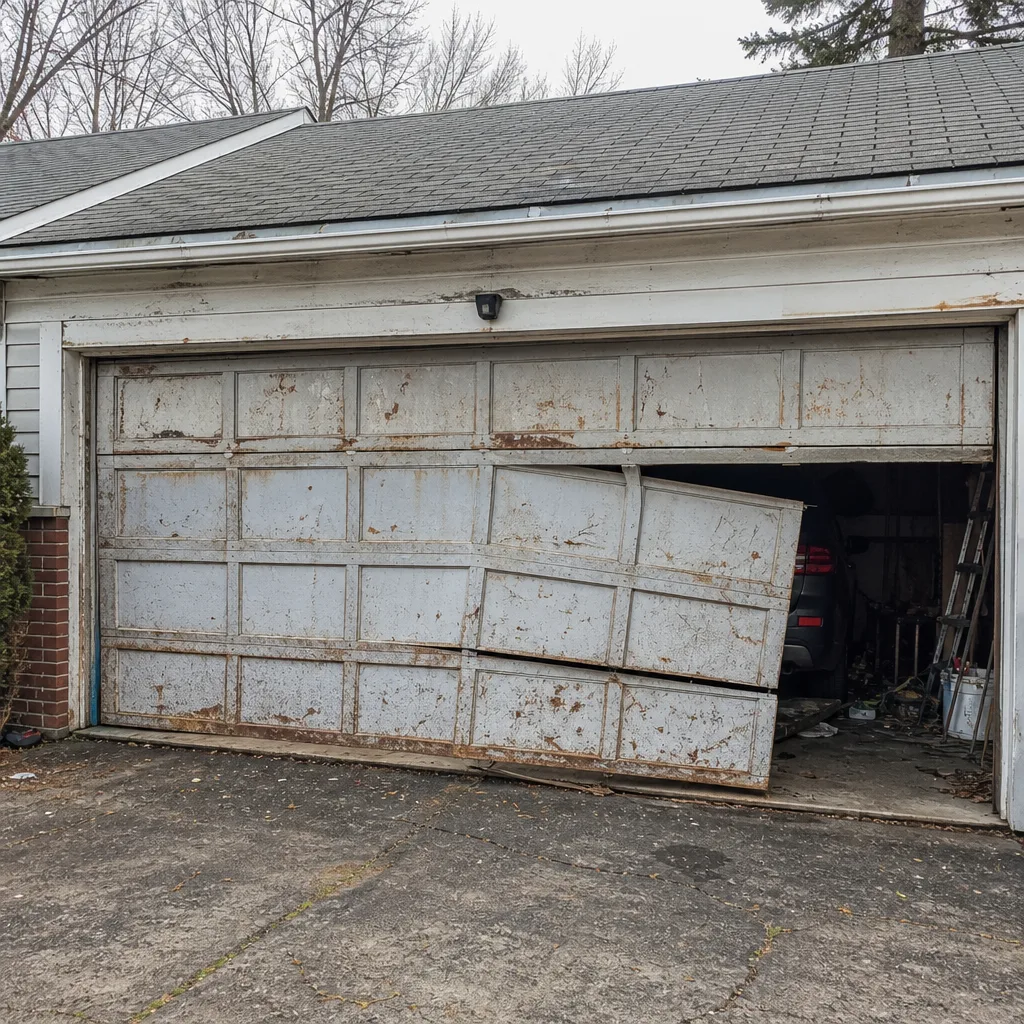 Before
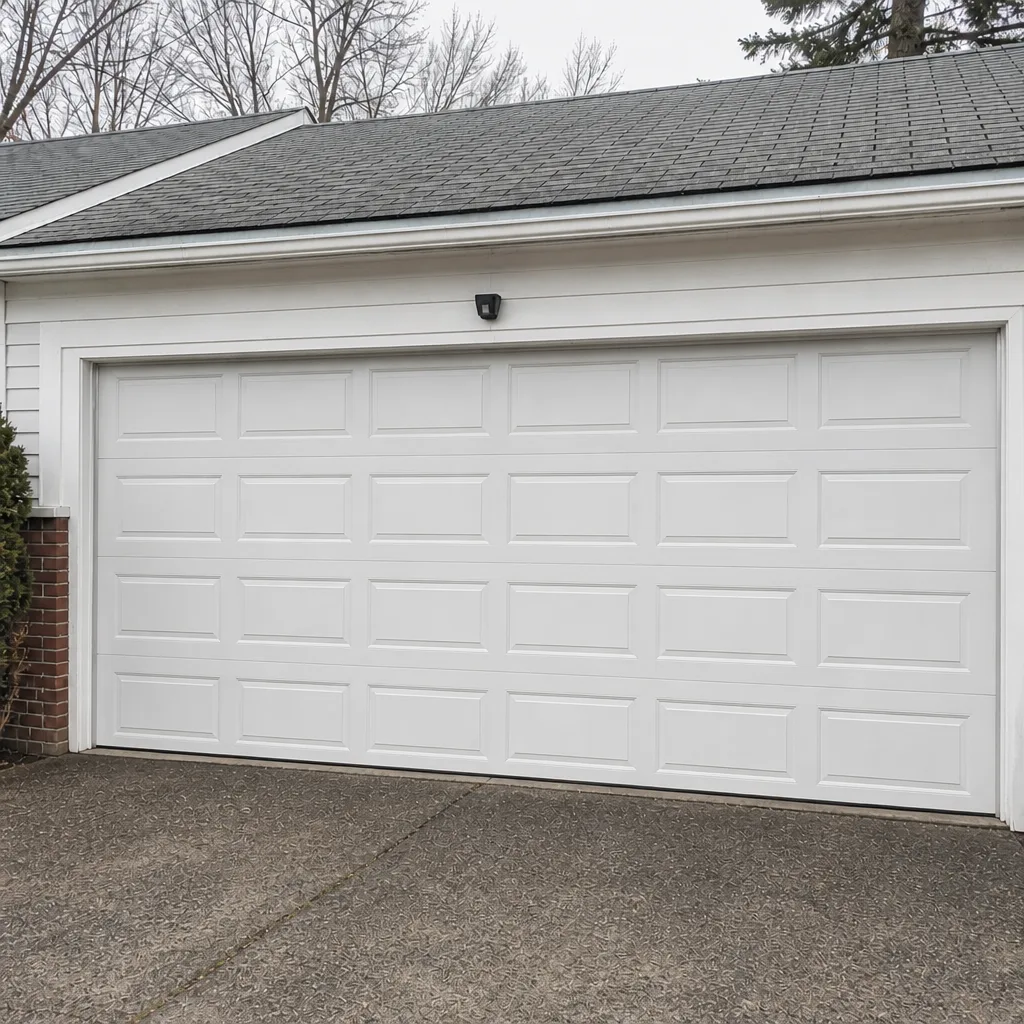 After
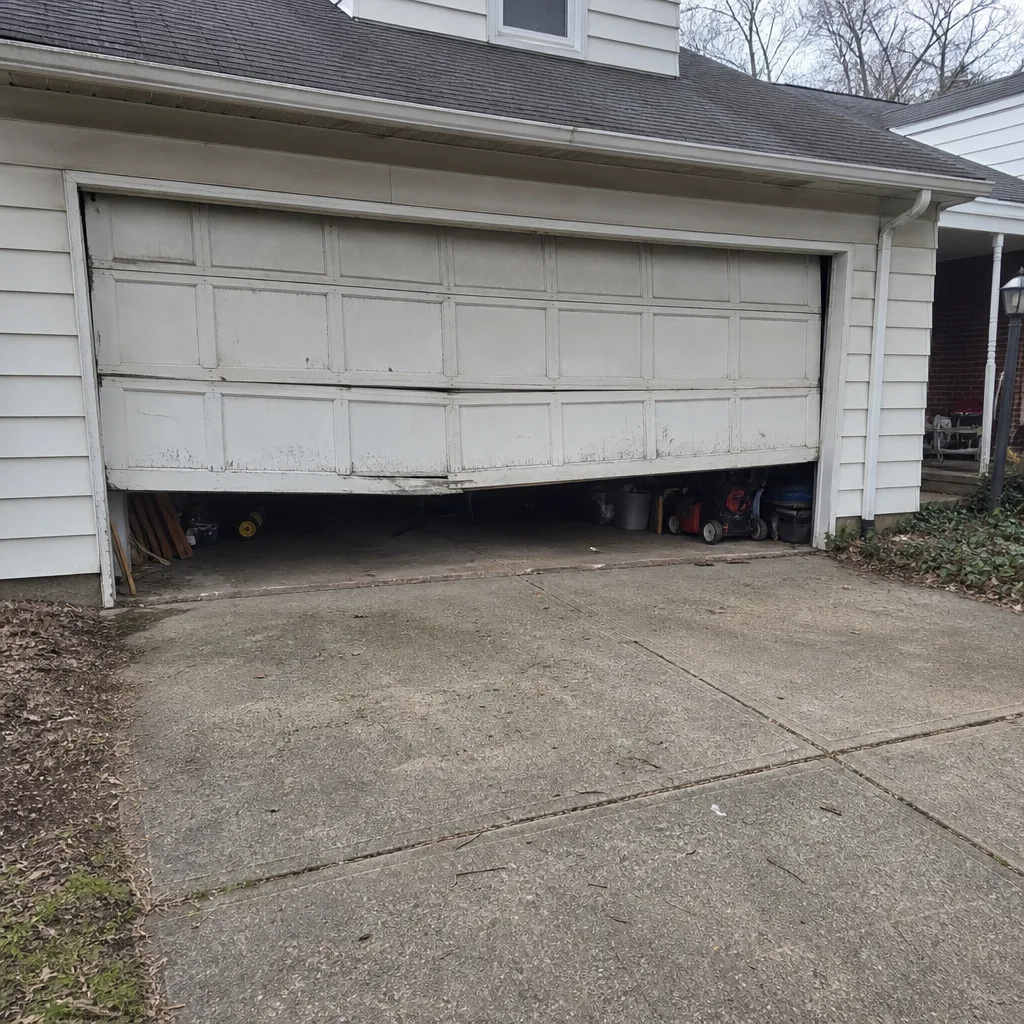 Before
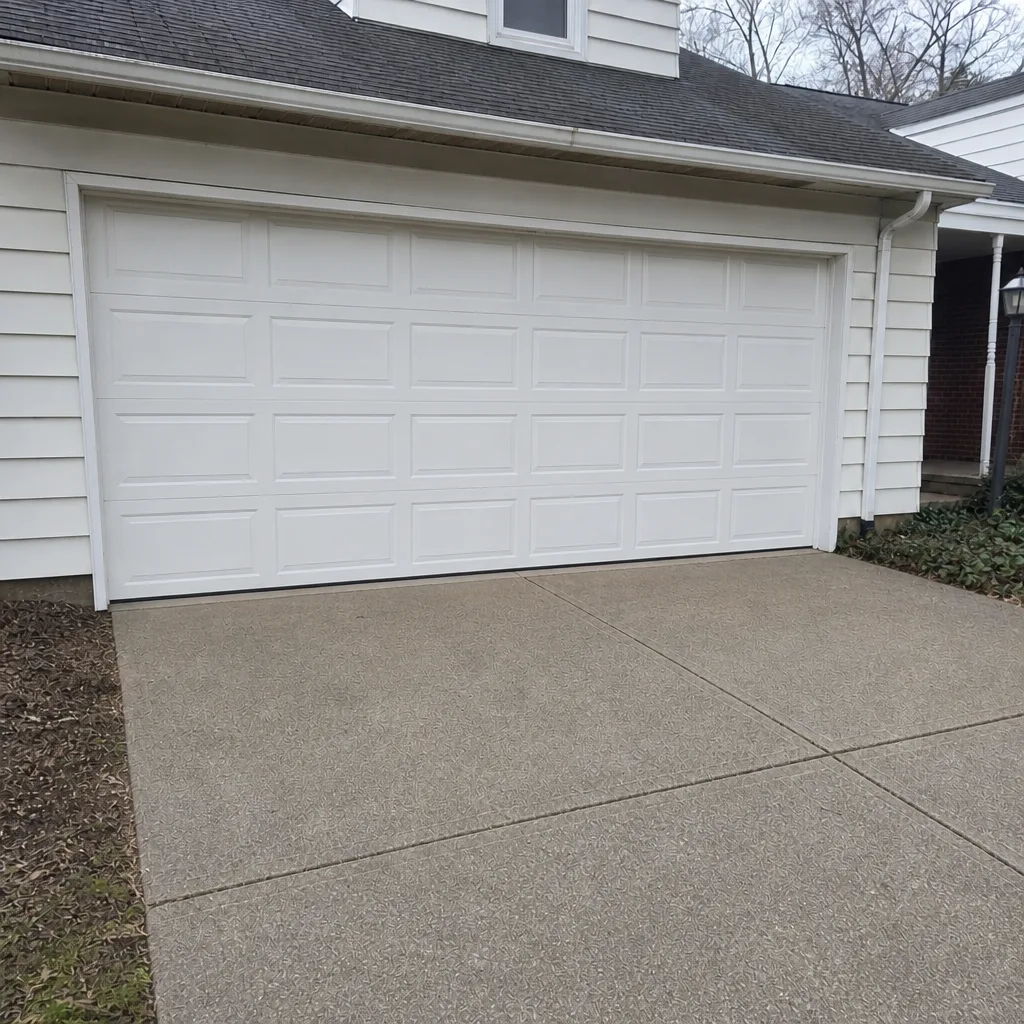 After
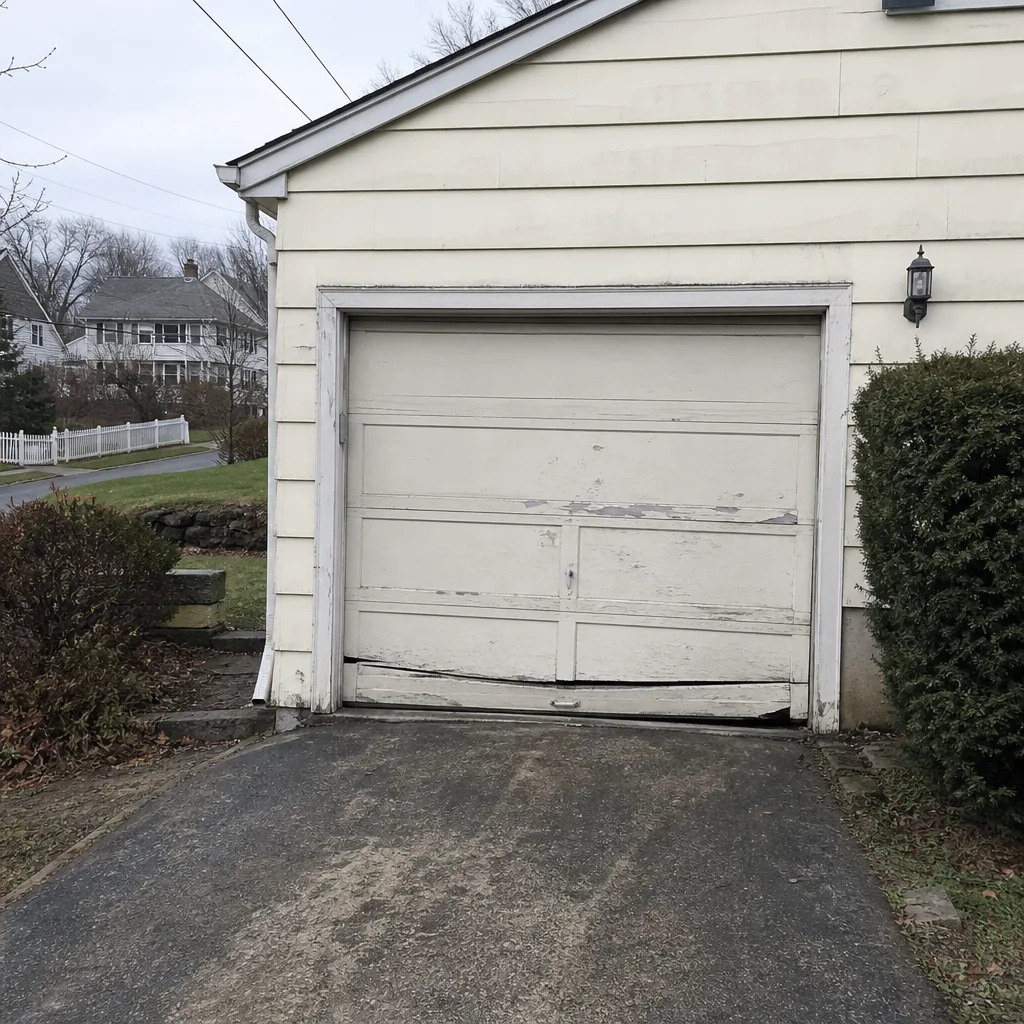 Before
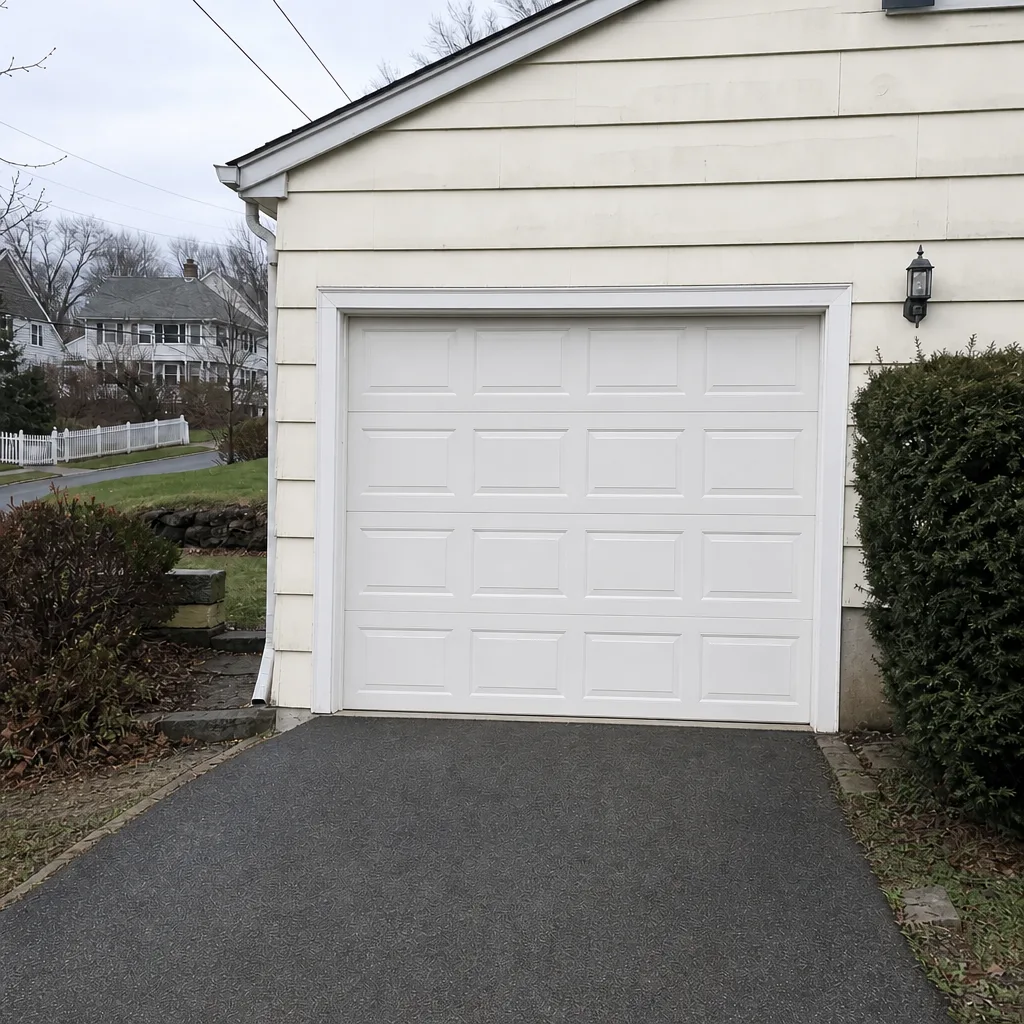 After
When to Call a Professional
Some garage door problems are safe to inspect and diagnose yourself. Others aren’t. The dividing line is spring tension. Call a trained technician the moment a spring snaps, a cable frays, or a door comes down harder than it used to. Call us if the door won’t open or is stuck open overnight, if the opener runs but the door doesn’t move, if a panel is cracked or rusted through, or if you’re planning a replacement and need the rough opening measured before you order. West Hartford Garage Door Repair offers free estimates in West Hartford. Call (855) 814-3469. We answer 24/7. Fast dispatch from 7am to 7pm, Sunday through Friday.
Frequently Asked Questions
Spring repair is typically priced per spring, with a matched pair costing about twice the single-spring estimate because the pair is usually replaced together. The written estimate you get before work starts sets the final price. Call (855) 814-3469 for an exact quote – estimates are free.
For a same-size door swap, usually not – but anything that changes the opening size, modifies the header, or alters the appearance of a street-visible door can trigger review. West Hartford’s building department is the authority on your specific address, and a quick call before you order hardware is the cheapest step in the process.
Because West Hartford has a lot of homes built before 8-foot-wide single doors became the standard. A 1920s colonial or a mid-century split-level may have a 7-foot-wide opening, low headroom, or narrow sideroom. Measure the rough opening at three points before you order anything.
Often, yes. Spring, cable, and opener failures are the calls we handle fastest, and emergency service is a real offering here, not an upsell. Call (855) 814-3469. We answer 24/7. Fast dispatch from 7am to 7pm, Sunday through Friday.
We’re factory-familiar with LiftMaster, Chamberlain, Genie, Clopay, Amarr, Wayne Dalton, Craftsman, and Raynor – eight of the most widely installed brands in North America. Tell us the brand and model when you call and we’ll diagnose by what that specific system does.
No – the price we quote is the price you pay, set by the written estimate before any work starts. We’ll tell you if something we couldn’t see on the phone changes the scope, and we’ll get your approval on the revised estimate before proceeding. Call (855) 814-3469 for a free estimate.
The Bottom Line
The garage door in your West Hartford home was probably framed to a spec that’s different from what a national guide or an online catalog assumes. Measure the rough opening before you buy anything. Read the hardware – spring type, track gauge, opener horsepower – so you know what a repair or replacement has to match. Choose material for freeze-thaw survival, not showroom looks. Confirm permits with the town before you change the size or appearance. Then decide repair or replace against the lifecycle question: how many good years does a repair actually buy? When a spring is under tension or a door won’t move, stop and call. We work on the brand you already have, and the written estimate sets the price. For the parent service overview, start with West Hartford Garage Door Repair.
Call (855) 814-3469 for a free estimate. We answer 24/7. Fast dispatch from 7am to 7pm, Sunday through Friday.
Written by the team at West Hartford Garage Door Repair.